


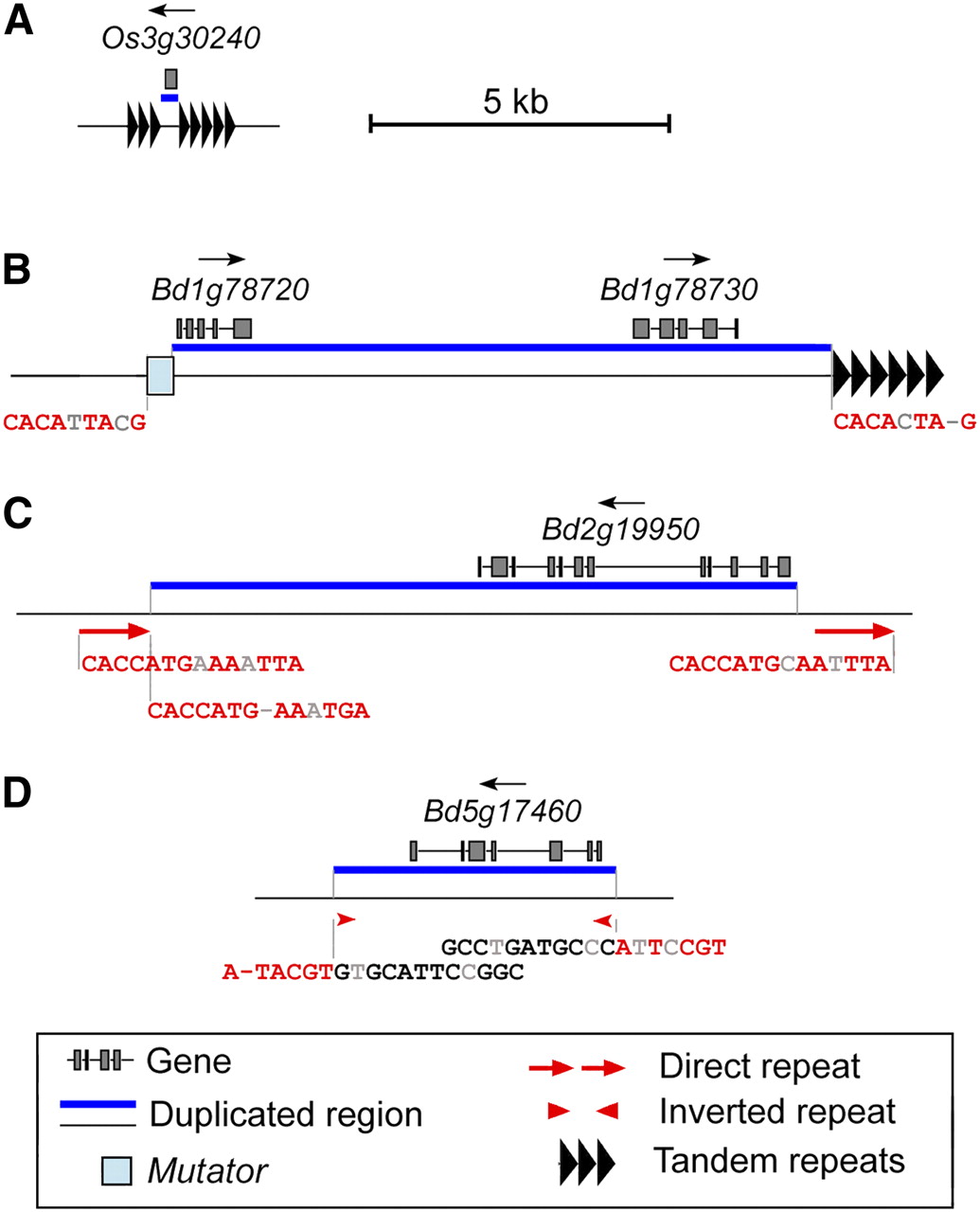
Examples of gene movements that were triggered by mechanisms other than transposable element insertions. (A,B) The duplicated region is flanked on one or both sides by an array of tandem repeats. The DSB was possibly introduced during a template slipping or unequal crossing-over event. The example in B is flanked on one side by a Mutator element. It is possible that a combination of the TE insertion and the presence of the repeat array led to the DSB (see also Fig. 4). (C) A duplication caused by a replication slippage event led to a DSB that was then repaired with the foreign fragment. (Red) Signature sequences that presumably served as templates for the template slippage; (gray) mismatches (see also Supplemental Fig. 2). (D) An accidental inverted repeat structure (black/gray letters) flanking the gene was possibly recognized by a “stray” transposase. The inserted fragment is flanked by a TSD (red/gray letters).



