


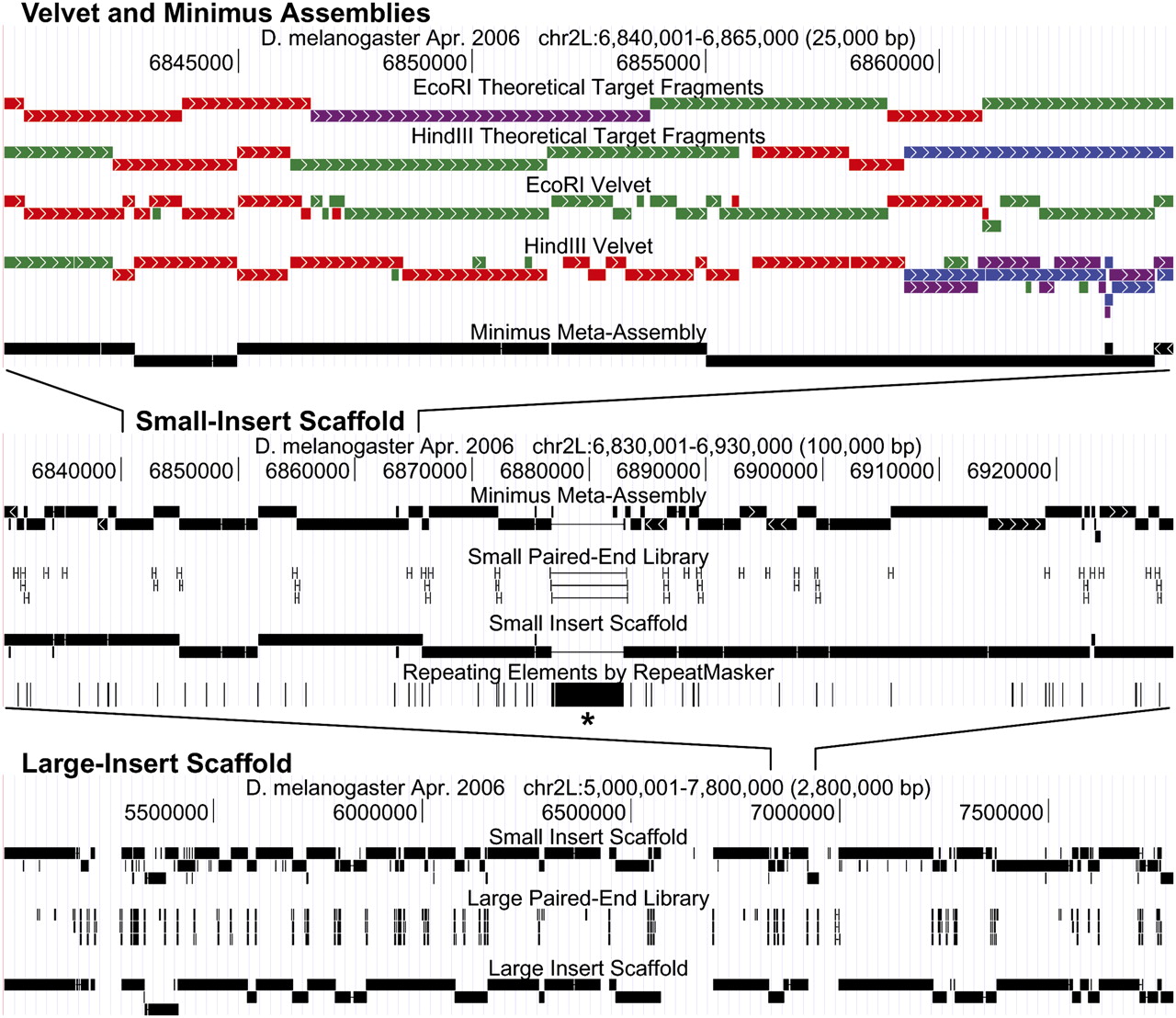
This is a screenshot from the UCSC Genome Browser exhibiting the alignment of each RR library to the reference genome. The top four tracks summarize the Velvet assembly steps. Contigs are color-coded by library as red (1–4 kb), green (4–7 kb), purple (7–9 kb), or blue (9–30 kb) bars. The top two tracks are the theoretical in silico restriction enzyme digested contigs. The actual EcoRI and HindIII contigs aligned back to the dm3 reference are show in the next two tracks. There is relatively little overlap between contigs in different libraries generated from the same restriction enzyme. The next track shows the RR meta-assembled contigs, resulting from merging the eight libraries with Minimus. Short and large genomic paired-end libraries facilitate the scaffolding of the contigs into the final assembly, shown in the bottom two panels. An LTR element deletion suggested by our assembly, marked by an asterisk (*) in the middle panel, was verified by alignment of the genomic paired-end reads flanking the deletion. If those read pairs contained the LTR element, their insert size would be several deviations larger than the mean for that library. The alignments depicted here are from the same region of chromosome 2 with the window zoomed out for each successive panel.



