


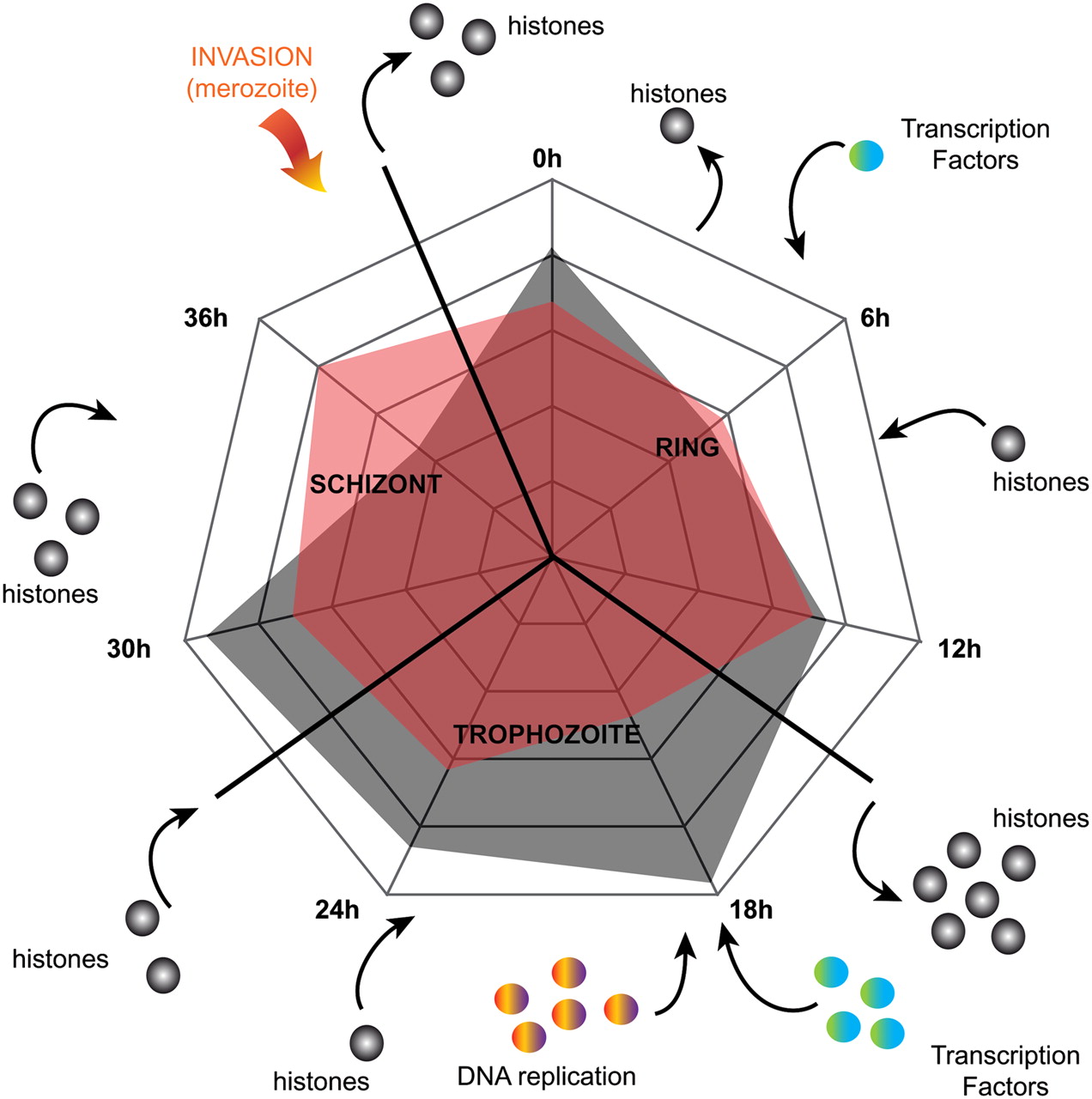
Proposed model of chromatin remodeling throughout P. falciparum’s erythrocytic cycle. Genome-wide variations of densities of coverage for MAINE-seq (red) and FAIRE-seq (black). After the invasion of a red blood cell by a parasite at its merozoite morphological stage, histones are depleted and chromatin loosens. During the ring stage, transcription occurs locally in a regulated manner. At the early trophozoite stage, histones are massively depleted. Replication and transcription factors can freely bind. DNA-related metabolic processes are permitted. After replication, DNA re-packs at the schizont stage and the parasites divide and escape the host as differentiated merozoites that are ready for a new cycle of infection.



