


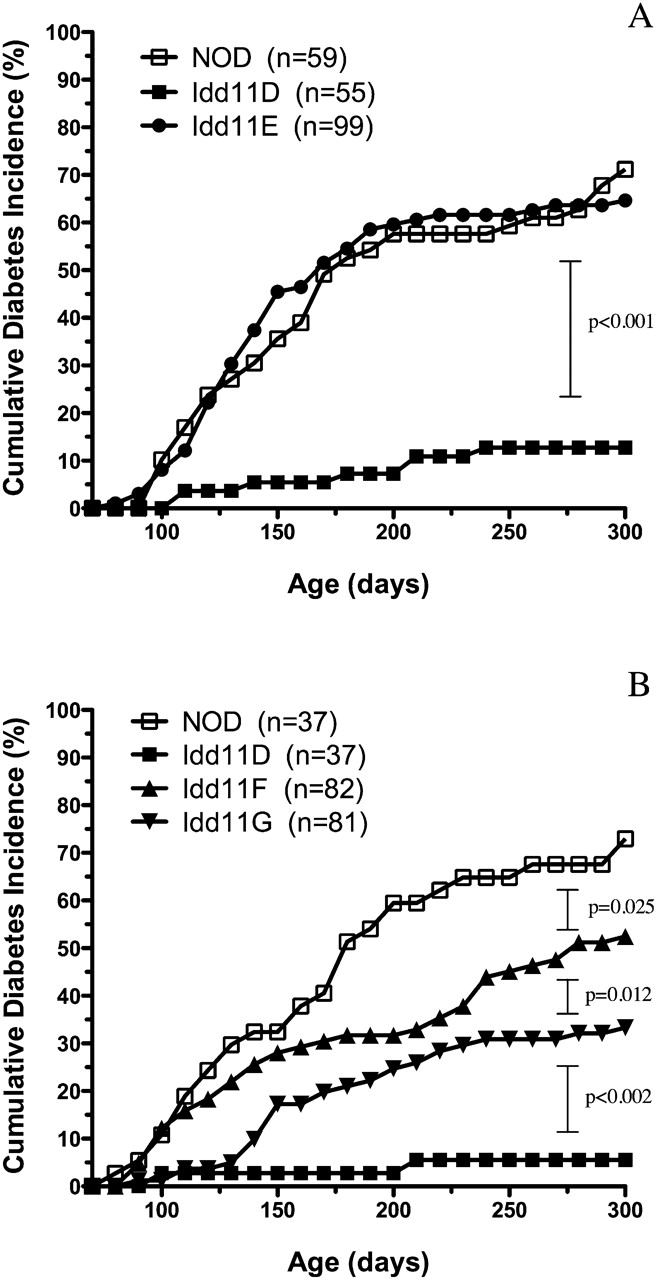
Cumulative diabetes incidence curves for Idd11 congenic strains. Female cohorts were monitored for diabetes by measuring urinary glucose levels. Pairwise comparisons of diabetes incidence curves were performed using the log-rank test. As a historical footnote, Idd11E was monitored first because it was presumed that this strain would be protected against diabetes given that Idd11B exhibited a similar diabetes incidence curve to NOD (Brodnicki et al. 2000). Once we observed that Idd11E was not protected against diabetes, we established cohorts for Idd11F and Idd11G to confirm this result using independent congenic strains, which initially appeared to have congenic intervals similar to Idd11B and Idd11E, respectively (Table 1). Subsequent sequence analysis of the interval between D4Wehi5 and D4Wehi6 (Table 2) identified genetic variation that explained the diabetes incidence observed for Idd11B (Brodnicki et al. 2000) and Idd11E (A).



