


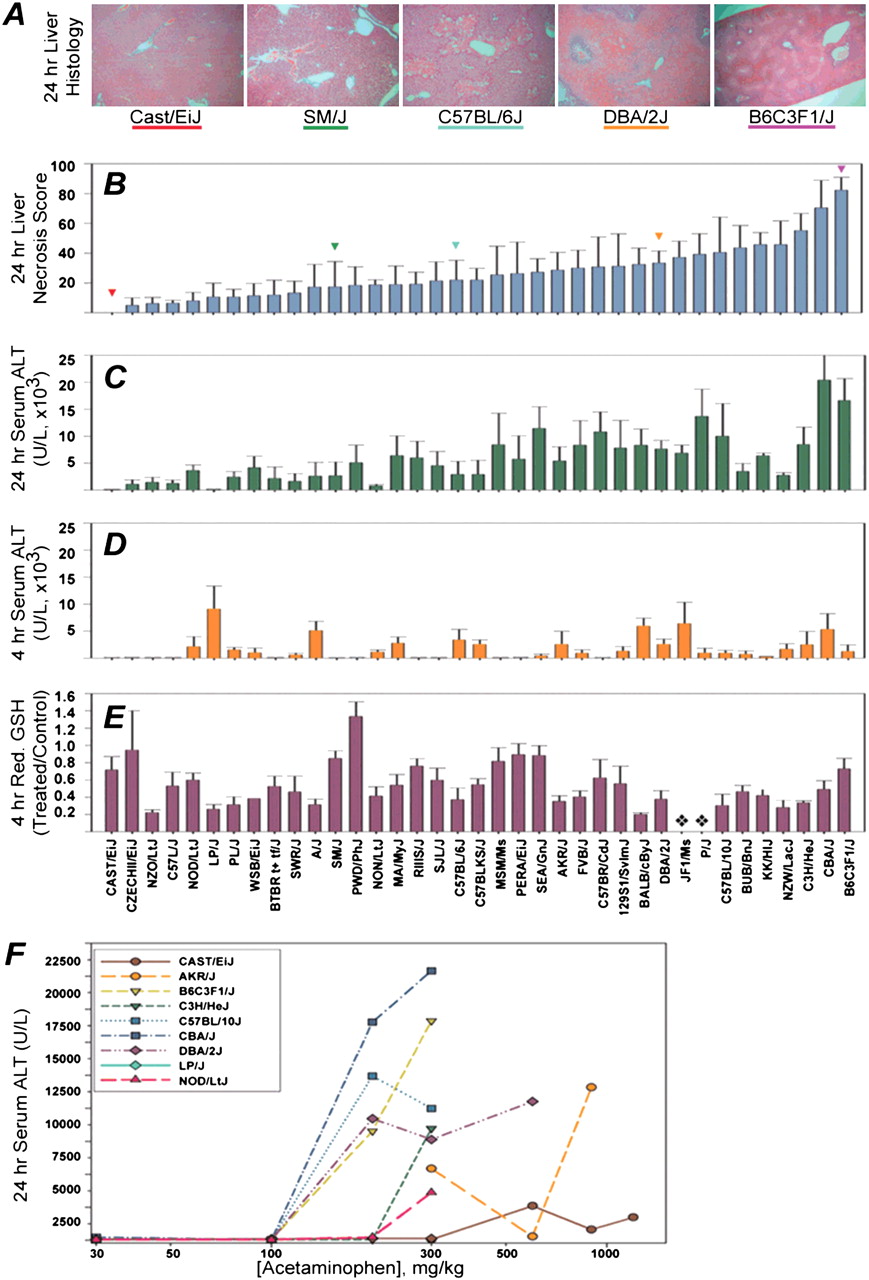
Response to the acute dose of acetaminophen in a panel of mouse strains. (A) Representative photomicrographs (100×) of the hematoxylin and eosin-stained sections of left liver lobe of mice 24 h after
dosing with acetaminophen (300 mg/kg). (B) Liver necrosis score (mean ± SE, n = 3–4/strain) in mice treated with acetaminophen (300 mg/kg) for 24 h. (C) Serum ALT levels (mean ± SE) in acetaminophen-treated mice sacrificed 24 h after dosing. (D) Serum ALT levels (mean ± SE) in acetaminophen-treated mice sacrificed 4 h post-dosing. (E) Liver reduced glutathione (ratio between acetaminophen- and vehicle-treated animals in each strain, mean ± SE) 4 h post-dosing.
( ) Strains with no data. (F) Dose-response to acetaminophen-induced liver injury as measured by ALT release (n = 4/strain, mean ± SE) at 24 h after treatment.



