


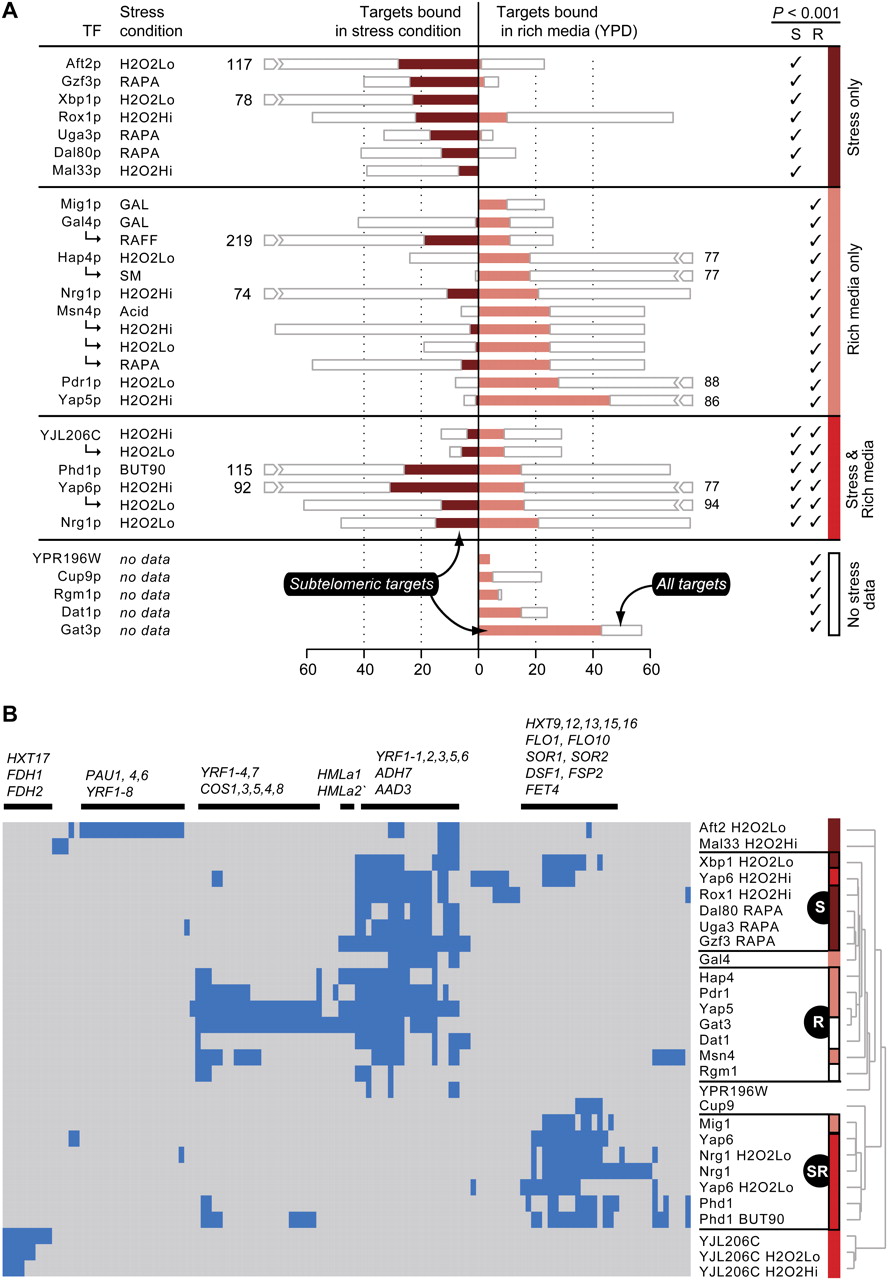
Subtelomeric binding preference is dynamic and distributed into distinct clusters. (A) Comparison of stress versus rich-medium SBTF promoter binding profiles. Dark and light horizontal red bars indicate the number of subtelomeric targets bound. Open bars indicate the total number of targets bound. Check marks on right indicate whether the SBTF shows a significant (P < 0.001) subtelomeric preference in the stress condition (S) or rich (R) medium. (B) Hierarchical clustering of the 125 subtelomeric genes (columns) bound by one or more SBTFs (rows). Blue indicates binding. Colored bars at right correspond to the dynamic binding behaviors in A: SBTF displays a subtelomeric preference in stress only (S; dark red), rich media only (R; light red), or both stress and rich media (SR; bright red). Stress conditions are abbreviated: Acid (succinic acid at pH 4); BUT90 (1% butanol); GAL (2% galactose); RAFF (2% raffinose); H2O2Lo (0.4 mM hydrogen peroxide); H2O2Hi (4 mM hydrogen peroxide); RAPA (100 nM rapamycin); SM (0.2 mg/mL sulfometuron methyl, an inhibitor of amino acid biosynthesis).



