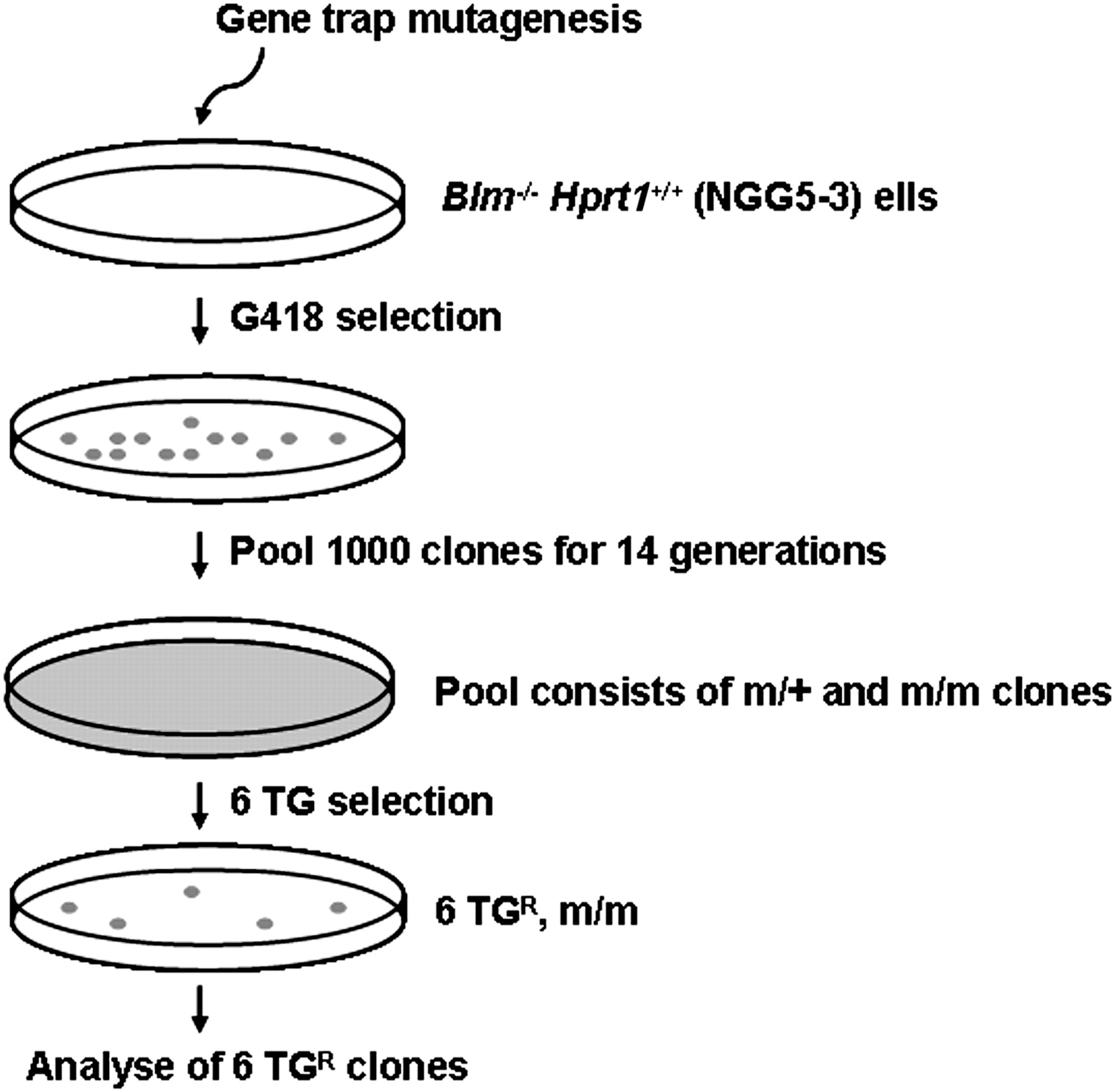
Strategy to generate and isolate 6-TG resistant clones. Blm−/−, Hprt1+/+ (NGG5-3) cells were used to generate gene-trap mutations by transposon gene-trap mutagenesis. The gene-trapped clones were selected with G418, pooled and expanded for 14 generations. After expansion, each pool, which consists of heterozygous and homozygous clones, was screened using 6-TG, and resistant clones were picked for further analysis. 6-Thioguanine (6TG) is utilized by the purine nucleotide synthesis pathway and is incorporated into replicating DNA leading to mismatchs within the DNA duplex. The MMR complex recognizes this type of mismatch and initiates multiple rounds of repair, which generates single- and double-strand DNA breaks. These activate signaling pathways and lead to cell cycle arrest and apoptosis. Thus, 6-TG is a sensitive selective agent for the isolation of DNA MMR mutants.