


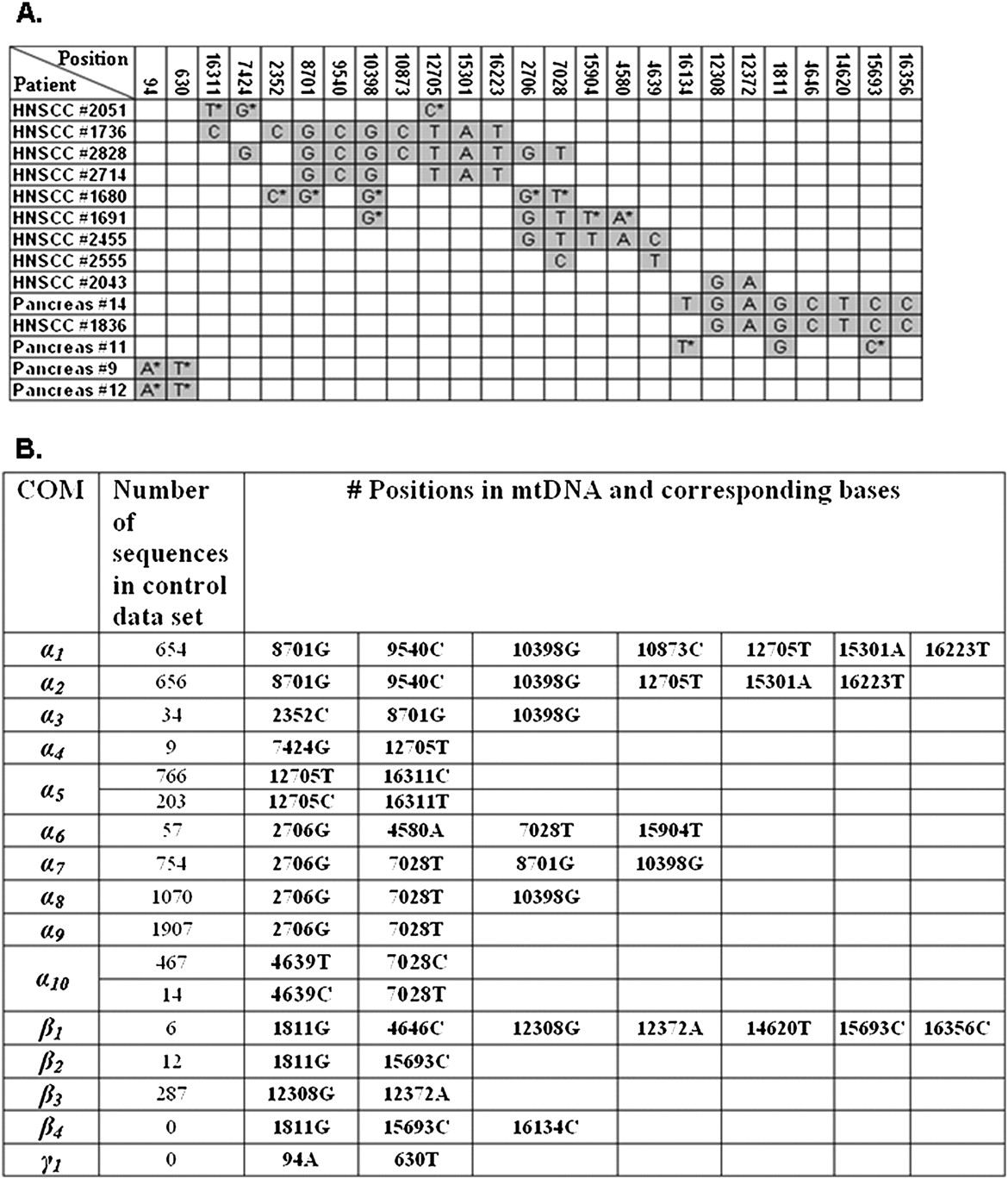
Recurrent tumor-related mutation combinations of HNSCC and pancreatic tumors. Tumor-related mutations reported in HNSCC (Zhou et al. 2007) and pancreatic cancer patients (Kassauei et al. 2006) were scanned for COMs, defined as recurrent mutation of at least two positions in two different patients. (A) Mutations involved in the COMs. For each tumor (left column), the cancer type and patient identifier are provided as shown in the above-mentioned references. Nucleotide positions of mutations are according to the revised Cambridge reference sequence (GenBank AC_000021.2). Heteroplasmic mutations are marked with an asterisk (*). (B) A proposed naming convention for COMs. Overlapping COMs are considered to be part of a larger COM group, designated using Greek letters (α, β, γ, δ). In particular, COMs that belong to a certain group are named using a Greek letter in combination with a number.



