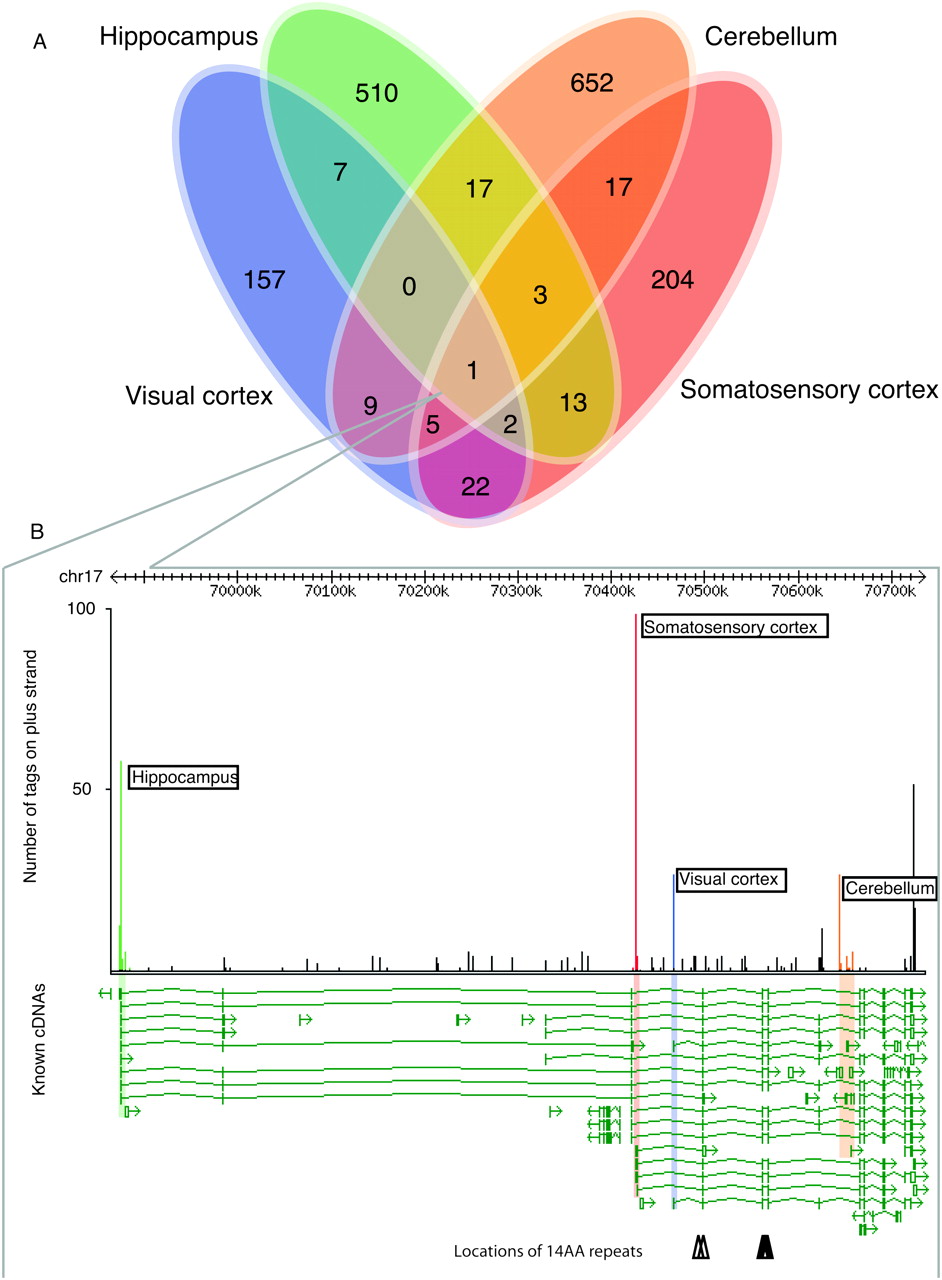
Alternative promoters preferentially expressed in different brain tissues. (A) The Venn diagram shows the number of genes having at least one preferentially expressed promoter (PEP) from any of the four sampled brain tissues, or any combination PEPs of the four tissues. For example, there are 15 genes that have at least one hippocampus PEP and one cerebellum PEP. (B) The Dlgap1 gene has four PEPs, one from each brain tissue. All of these are overlapping known 5′-ends inferred by cDNAs. There are five 14-amino-acid-long repeats in the N-terminal end of the corresponding protein that affects the ability to interact with other proteins. Repeats are indicated as triangles. Note that the cerebellum PEP is downstream from these and will give a protein that lacks these repeats.