


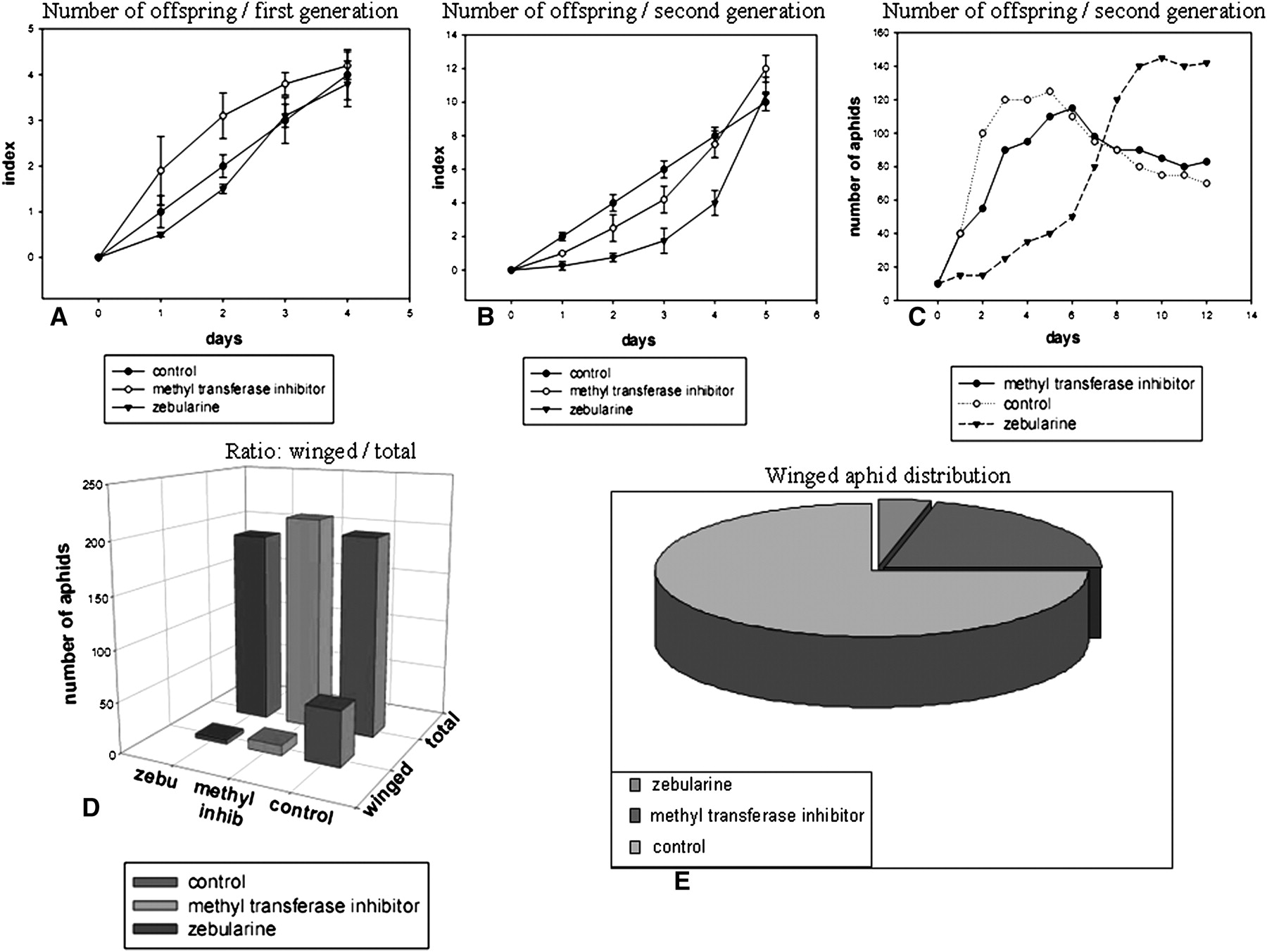
DNA methyl transferase inhibitors on polyphenism and number of offspring. Mature parthenogenetic wingless adults were injected separately with two different inhibitors of DNA methyl transferases. The first, zebularine, is a cytosine analog that becomes integrated into the genome. The second, RG108, blocks the active site of these enzymes. Wingless adult aphids were injected with 10 μL of zebularine solution (50 μM) and/or 10 μL of RG108 (10 μM). (A) After 24 h the progenies of injected mothers were counted over a period of 5 d. Ten mothers for each category (control, RG108, and zebularine) were analyzed in parallel and the experiment was repeated three times. Index represents comparative ratio of offspring growth. Values are the mean ± SE. (B) After reaching adulthood the progenies of the first generation were placed on a new plant and “granddaughters” were counted over a period of 5 d. Ten aphids were used in parallel and the experiment was repeated three times. Index represents comparative ratio of offspring growth. Values are the mean ± SE. (C) Five adult aphids of the first generation (daughters of control, zebularine, and RG108-injected aphids) were placed on a new plant in parallel and the progenies were counted each day. The experiment was repeated four times and the graph represents the cumulative numbers. (D) Winged progenies of the second generation of drug-injected aphids were counted versus the total. (E) Ratio of the winged animals in control and drug-injected aphids. Ten drug-injected aphids were placed on plants and the cumulative number of winged animals was counted for the next three generations. The ratio is drawn from three cumulative separate experiments.



