


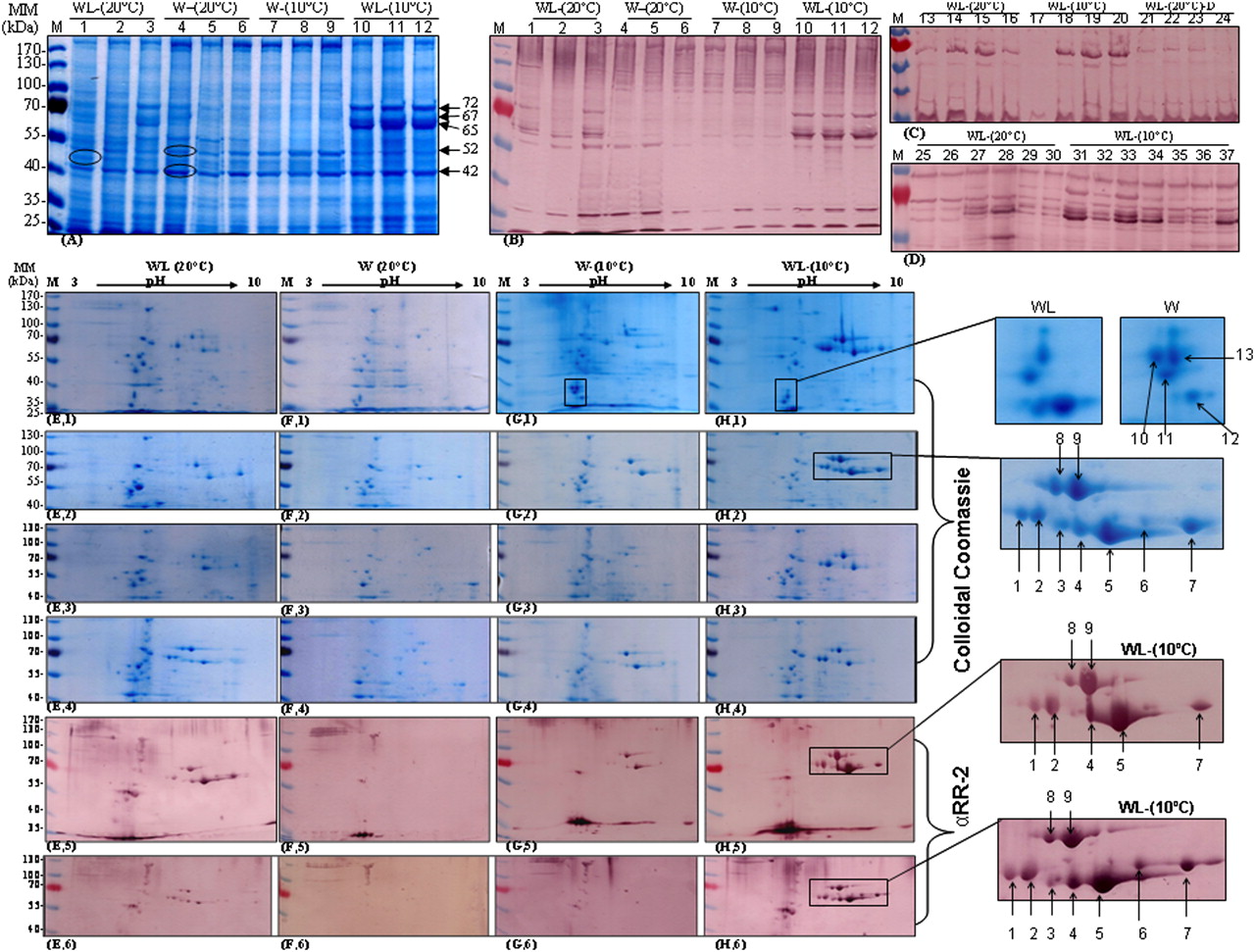
Variability of CP expression in individual A. pisum adults and its correlation with temperature. (A–D) A. pisum cuticle protein extracts (ApCPE) were separated by 1D 12% SDS-PAGE. (A) Coomassie staining. (B–D) Western blot analysis using antibodies raised against M. persicae CP (1:1500); (B,C) αMpcp2(D) antibody; (D) αMpcp2(N) antibody. (E,F) 2D separation of ApCPE by 15% SDS-PAGE. pH values are shown at the top and ranged from 3 to 10. ([E,1–E,4]–[H,1–H,4]) Gels were stained with colloidal coomassie blue (Sigma) and individual protein spots were then selected (numbered 1–9 and denoted by arrows) for subsequent protein sequencing by LC-MS/MS. ([E,5,E,6]–[H,5–H,6]) Western blot analysis using the αMpcp2(D) antibody. In C, WL (20°C)-D indicates aphids raised on declining plants.



