


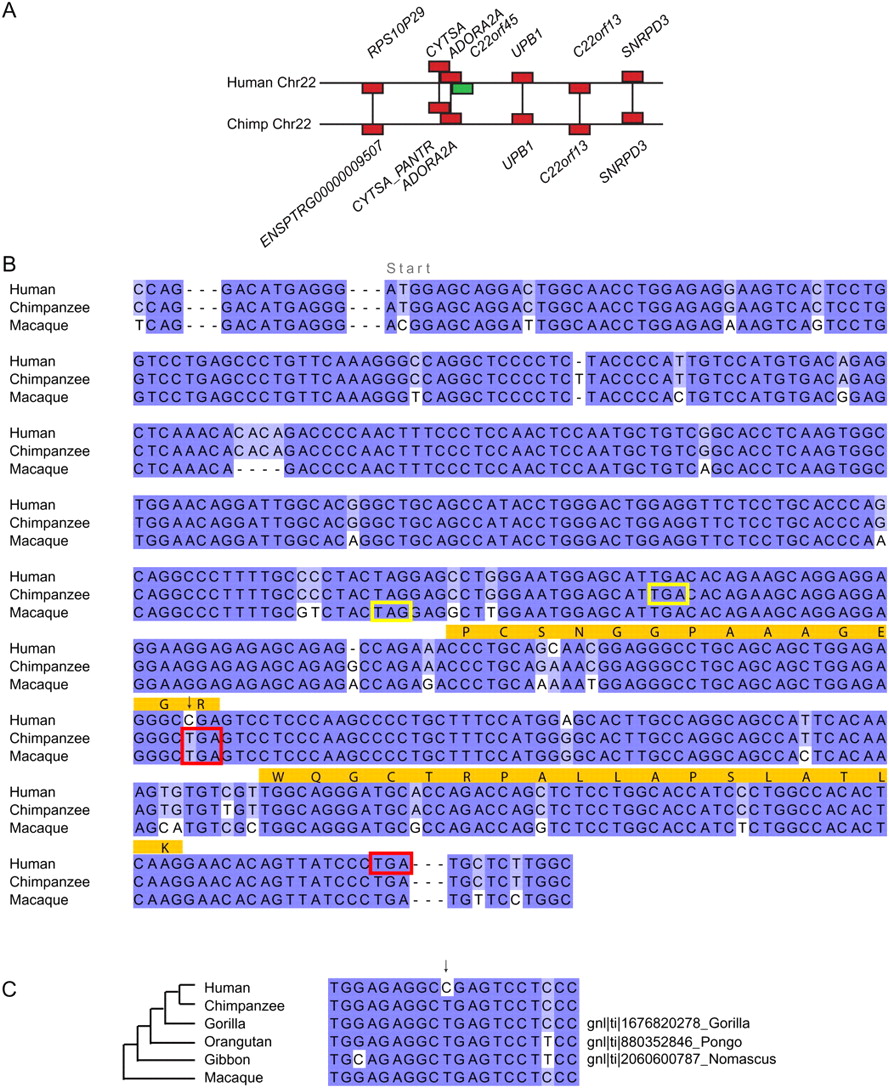
Sequence changes in the origin of C22orf45 from noncoding DNA. As in Figure 2: (A) Region of conserved synteny between human and chimp chromosomes 22. One gene in this region, C22orf45, had no BLASTP hits in any other genome and is shown in green. (B) Multiple sequence alignment of the gene sequence of C22orf45 and similar nucleotide sequences from the syntenic location in chimp and macaque. The arrow indicates the location of an in-frame stop codon shared by chimp and macaque that would result in premature termination (red box) irrespective of the other disablements. The codons highlighted with a yellow box indicate the stop codon including all disablements (indels) in chimp and macaque for the reading frame starting from the same location as the human start (note the ATG start codon is absent in macaque and that the frameshifts mean the hypothetical protein sequence is drastically altered). (C) The disabler is also shared by gorilla, orangutan, and gibbon indicating it is ancestral.



