


Main results of human and mouse genome-wide localization analysis
Click on table to view larger version.
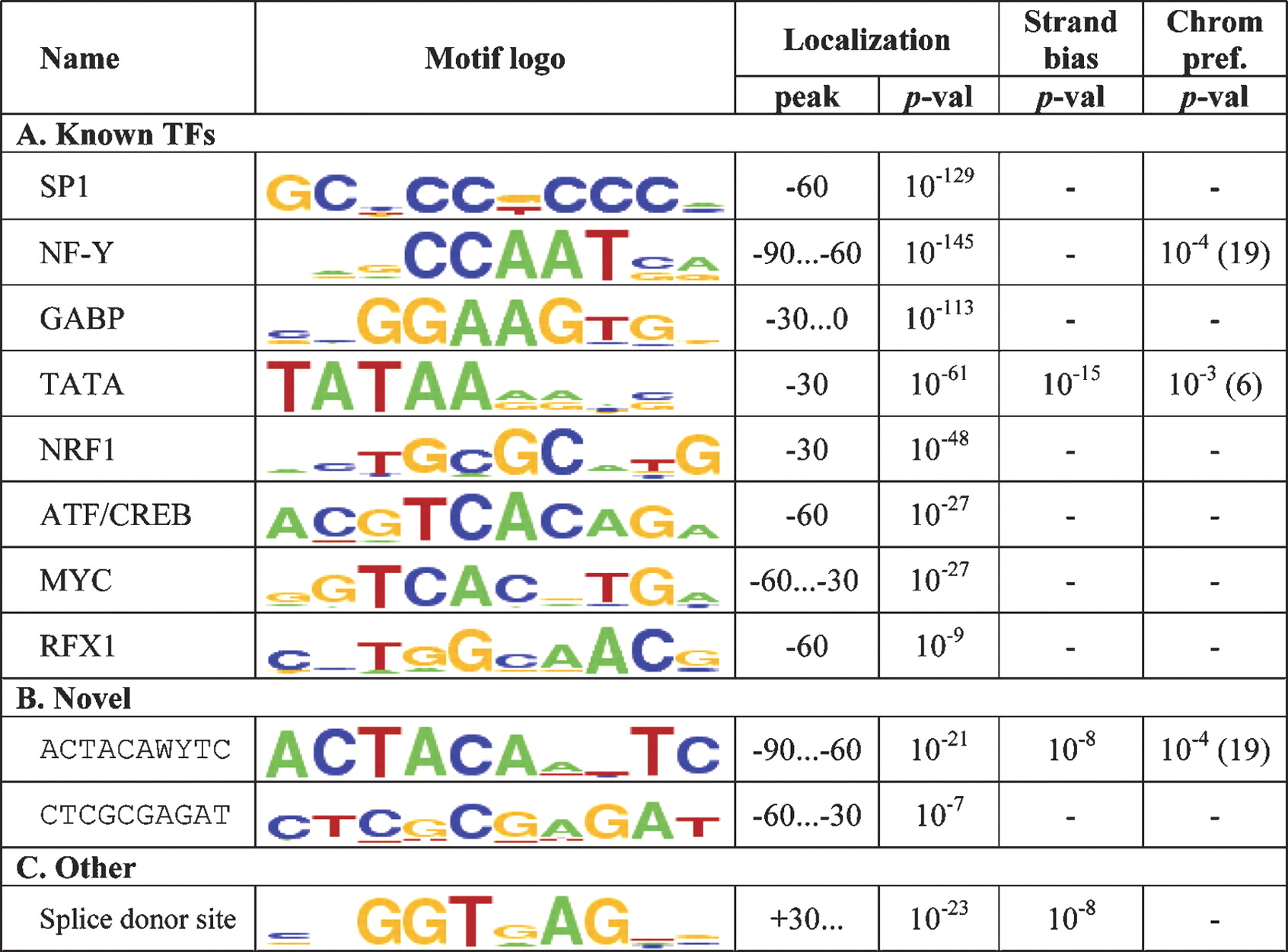
Amadeus was run on all human and mouse promoters and searched de novo for motifs that are significantly localized (i.e., overrepresented at a particular distance from the TSS, measured in bins of size 30) in both species. Approximately 23,000 and 24,000 human and mouse promoters, respectively, were analyzed. Promoters spanned from 500 bp upstream to 100 bp downstream of the TSS. Both known and novel motifs were found. All P-values listed in the table are for human. “Peak” refers to the center(s) of the location bin(s) with the largest motif occurrence rate. Amadeus also tests whether the motif occurrences are distributed nonuniformly between the strands (“Strand bias” column, showing the significance in human) or across the chromosomes (“Chrom pref.” column, showing also the overrepresented chromosome in human in parentheses).



