


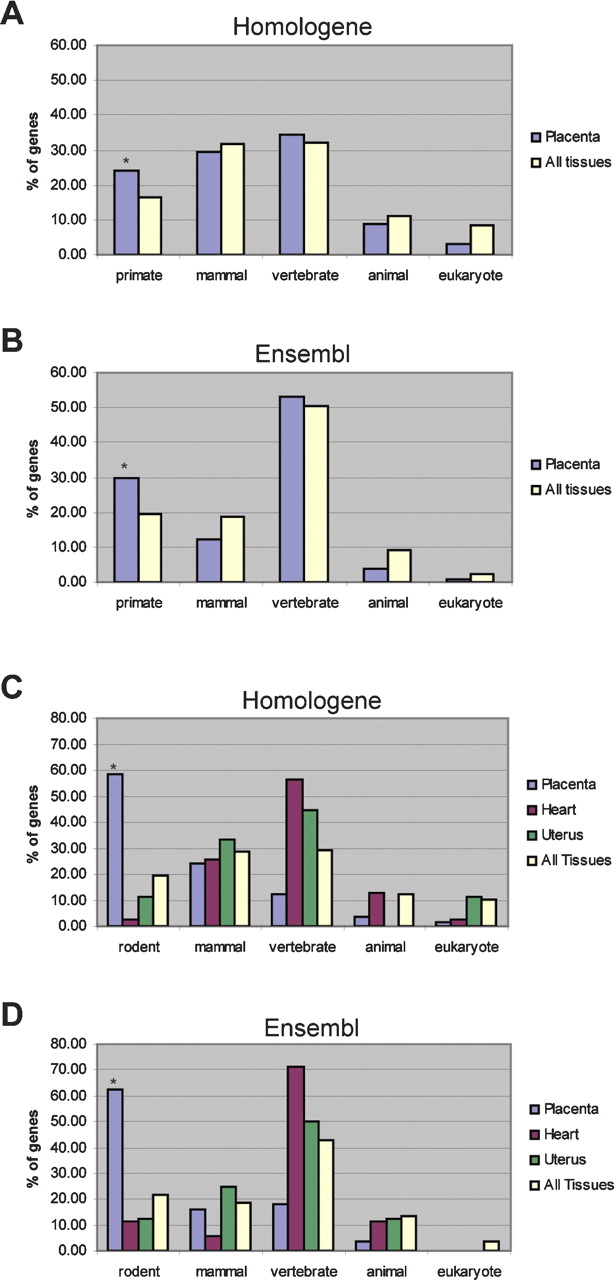
Primate-specific genes enriched in human mature placenta, indicating conservation of a gene duplication mechanism. Evolutionary origins of genes with PlacPEM ≥4 in mature placenta samples from the unscaled Novartis GeneAtlas human and mouse datasets using either Homologene (A) or Ensembl (B). Asterisks (*) indicate significant enrichment over background (All Tissues). In human, the GeneAtlas mature placenta gene set demonstrates significant enrichment of primate specific genes according to Homologene (P < 0.05) and Ensembl (P < 0.01). The GeneAtlas mature placenta gene set for the mouse is significantly enriched for rodent-specific genes according to both Homologene (P < 1.0 × 10⁻¹¹) (C) and Ensembl (P < 1.0 × 10⁻¹¹) (D). Genes with HeartPEM ≥ 4 (i.e., genes for which the heart expression level divided by the average expression is ≥4), UterusPEM ≥ 4, or PEM ≥ 4 in any tissue are included for comparison.



