


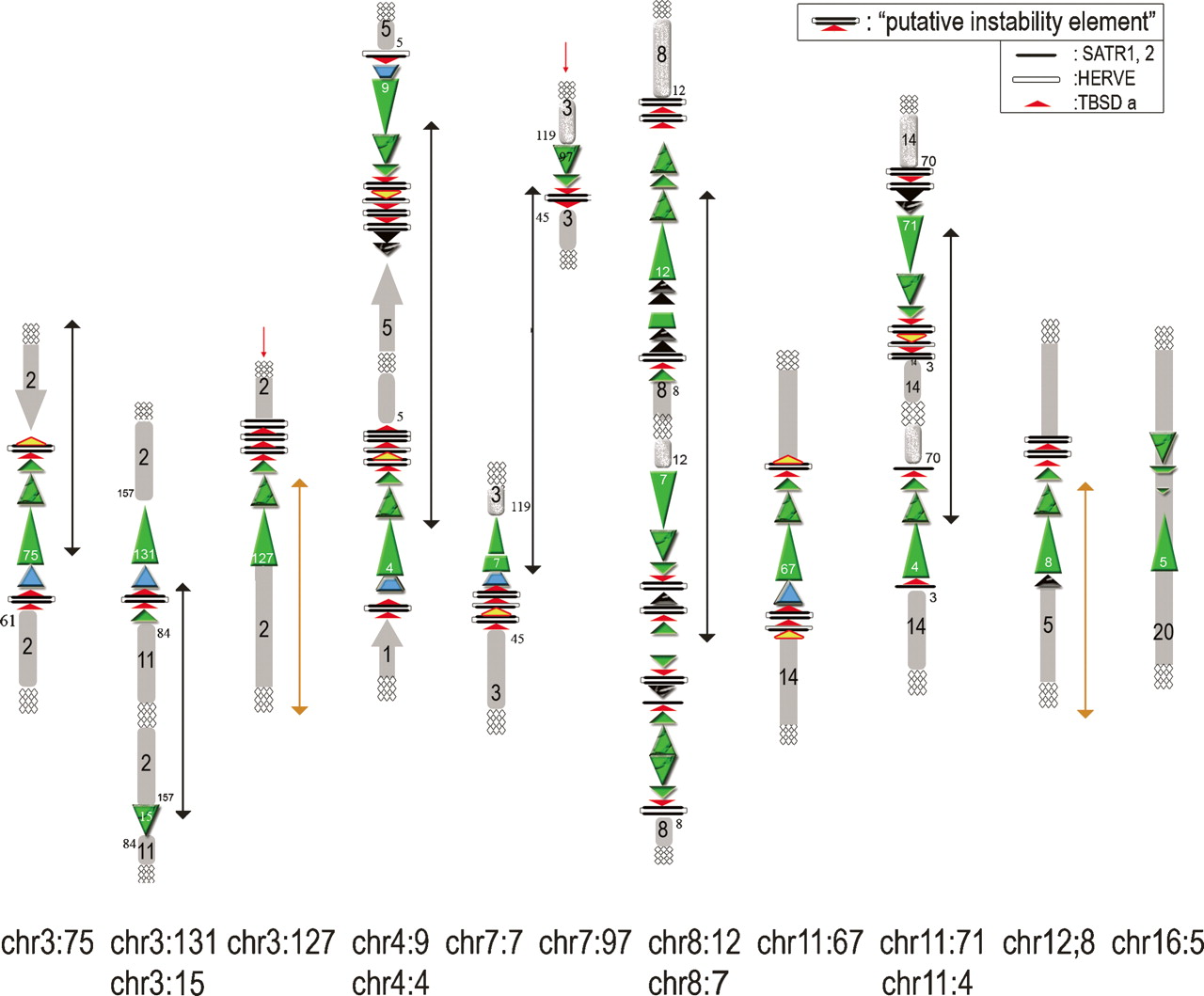
Schematic organization of the TBSDs from different human chromosomal sites as determined by comparison with the chr3:75 TBSD parts (see Supplemental Fig. 7G). All TBSDs, with the exception of those that are marked with a red arrow, are shown in pter–qter direction from bottom to top. Chromosomal segments, which have clearly identified conservation in rhesus genome, are shown in gray with corresponding rhesus chromosome number shown within the bar, and megabase position shown adjacent to the bar. Arrowhead on the bar indicates telomeric location of the rhesus orthologous sequence. Rounded end of the bar shows breakpoint of human–rhesus evolutionary inversions, indicated by black double-head arrows. The orange double-headed arrows show the inversions that occurred within this chromosomal region before human–rhesus, but after human–mouse divergence.



