


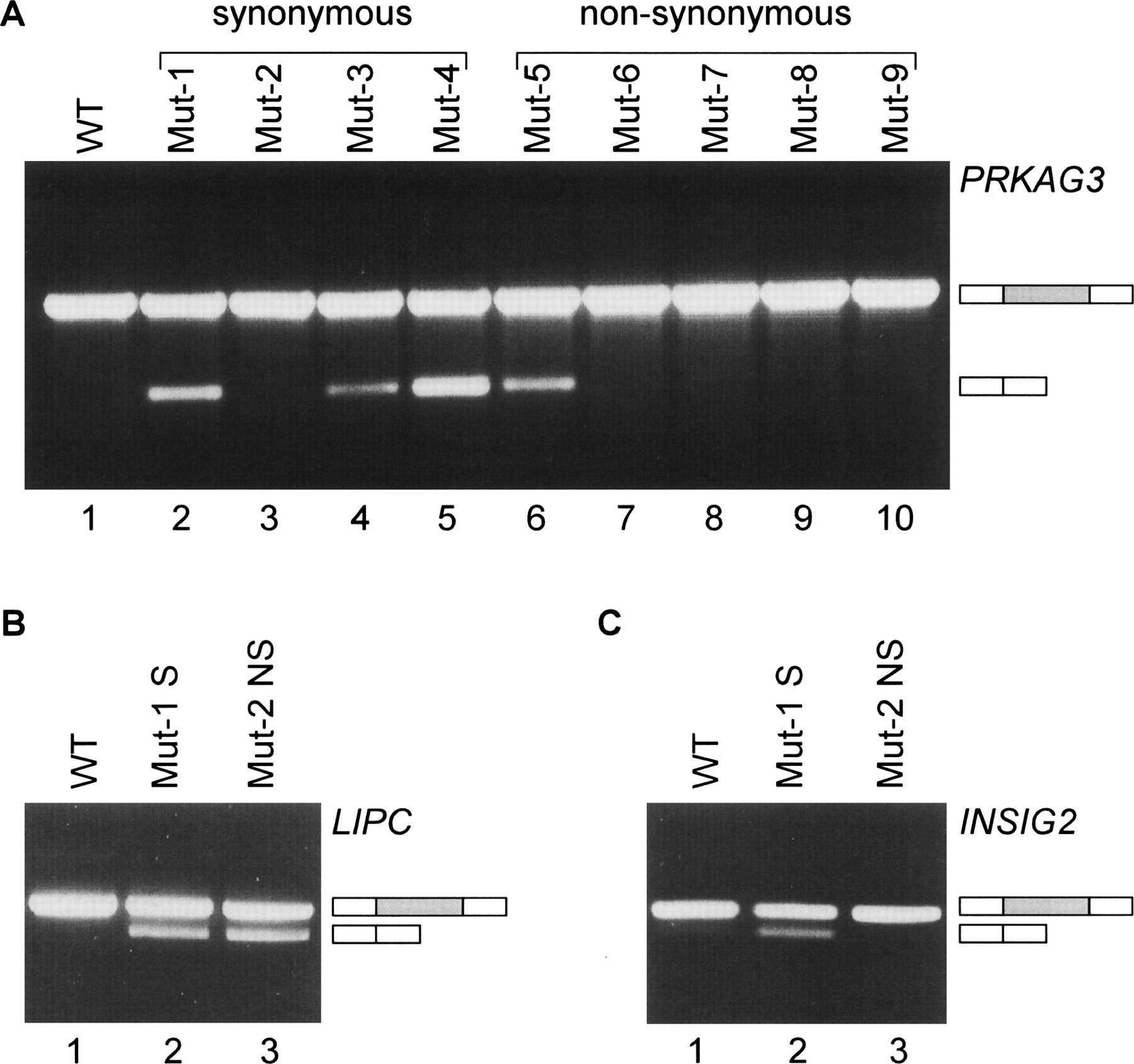
Figure 4.
Extreme BMI SNPs affect the splicing pattern. Plasmid mutants were introduced into cells by transfection. Total cytoplasmic RNA was extracted, and splicing products were separated on a 1.5% agarose gel after reverse transcription–polymerase chain reaction (RT-PCR). (A) Lane 1, wild-type (WT) PRKAG3; lanes 2–5, synonymous mutations; lanes 6–10, nonsynonymous mutations. (B) Lane 1, WT LIPC; lane 2, synonymous mutation; lane 3, nonsynonymous mutation. (C) Lane 1, WT INSIG2; lane 2, synonymous mutation; lane 3, nonsynonymous mutation. The two minigene mRNA products are shown on the right of each panel; empty and filled boxes define constitutive and alternative exons, respectively.



