


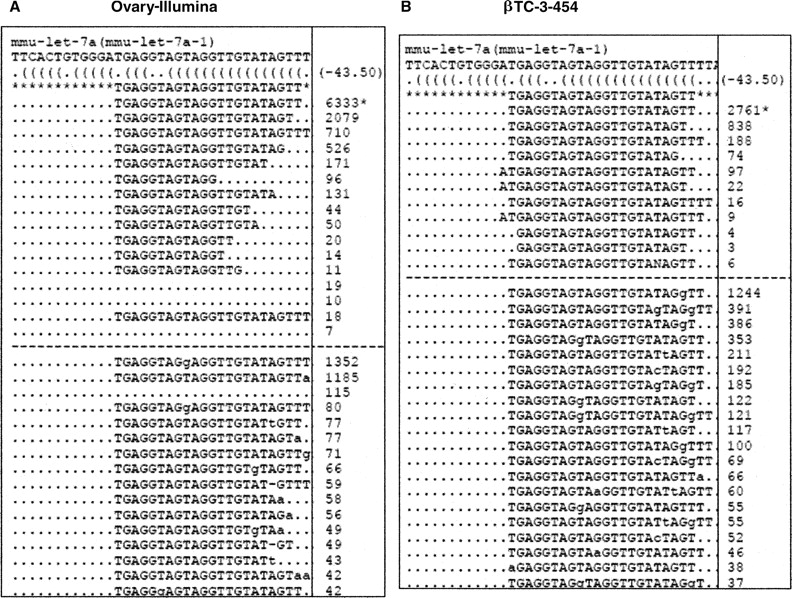
Nucleotide modifications associated with mmu-let-7a in the mouse ovary and βTC-3. This figure shows a heterogeneous collection of sequence signatures that align with the mmu-let-7a-1 precursor from miRBase 11.0 obtained through small RNA (<30 nt) sequencing of adult mouse ovary (A) and βTC-3 mouse insulinoma cell line (B). Copy numbers of each sequence signature in the total population are shown at the right end of each dotted line. Sequences that align with miRNAs mapping to more than one hairpin sequence on the genome (i.e., mmu-let-7a-1 and mmu-let-7a-2) are equally apportioned among the total number of hairpins know to occur. Collectively, the sequences highlight extensive length and sequence heterogeneity associated with mmu-let-7a. Sequence signatures that match the miRBase pre-miR precursor are shown above the dashed line. The signature flagged by an asterisk represents the mature miRNA as it is represented in miRBase 11.0. Loose matches aligning with one to three mismatches to the mmu-let-7a precursor are shown below the dashed line.



