


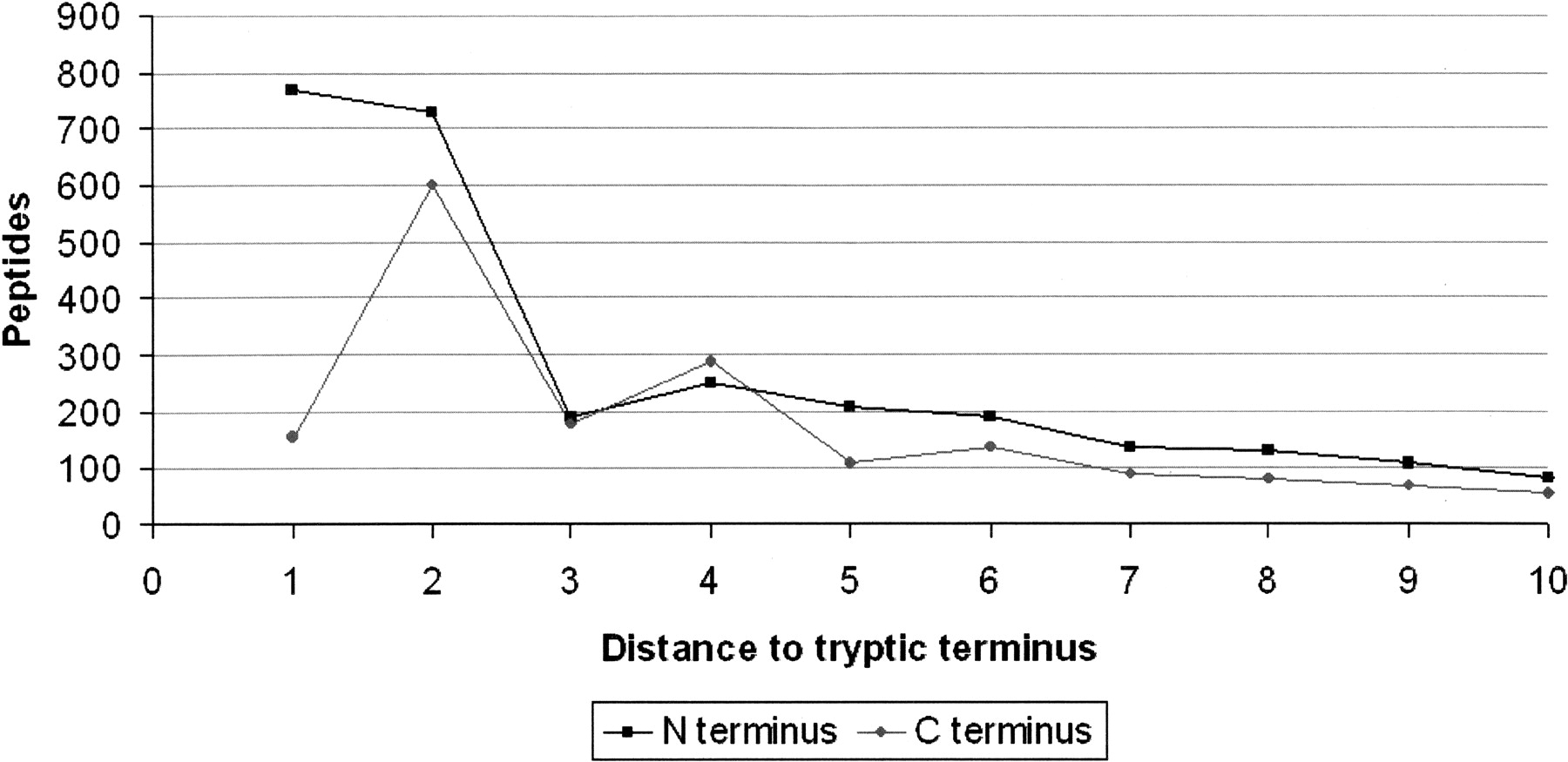
Most nontryptic peptides are contained in an identified tryptic peptide. The plot gives the distribution of residue distances from a nontryptic endpoint to the endpoint in the containing tryptic peptide. The plot describes 2178 peptides with a nontryptic C terminus and 3508 peptides with a nontryptic N terminus. Surprisingly, elimination of two residues (as opposed to a single residue) from the C terminus is particularly common. Peaks at even positions (2, 4, and 6) from the C terminus may reflect peptidyl dipeptidase activity that digest two amino acids at a time; dipeptidases acting at the N terminus are not known in Shewanella.


