


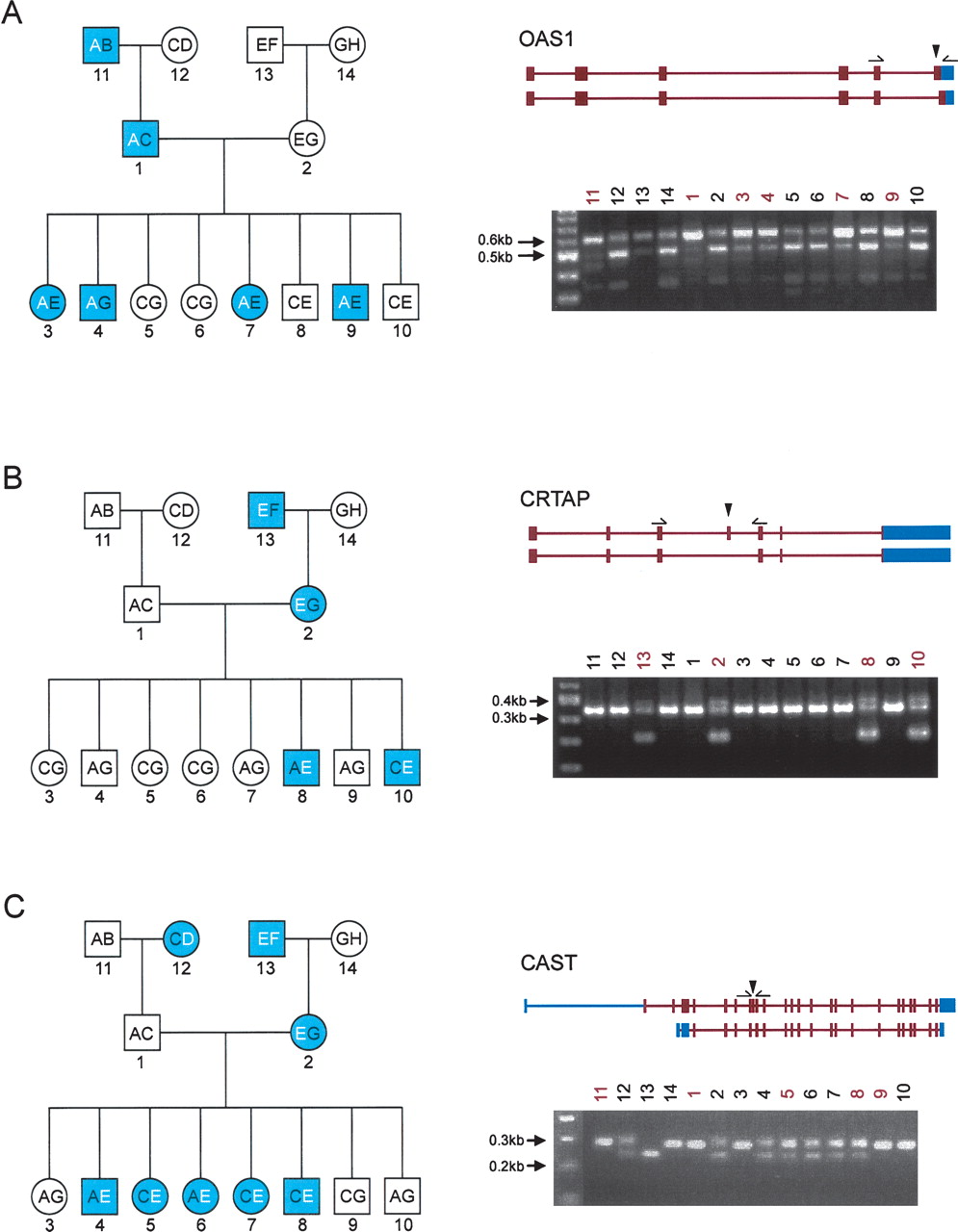
Heritability of alternative splicing. Inheritance of alternative splicing for genes (A) OAS1, (B) CRTAP, and (C) CAST. Left panel shows pedigree structure of CEPH/UTAH family 1444 with the autosomal dominant inherited splice pattern as blue symbols. Haplotypes for each of the eight founder chromosomes are labeled A, B, C, D, E, F, G, and H, and the two inherited haplotypes of each family member are indicated within the symbol. The regulatory haplotype is shown as bold white text. Squares represent males, and circles represent females. CEPH/UTAH 1444 pedigree is labeled as follows: 1 (GM12739), 2 (GM12740), 3 (GM12741), 4 (GM12742), 5 (GM12743), 6 (GM12744), 7 (GM12745), 8 (GM12746), 9 (GM12847), 10 (GM12747), 11 (GM12748), 12 (GM12749), 13 (GM12750), and 14 (GM12751). The right panel shows the two transcript isoforms of the genes. Exon-body primers are shown above the flanking exons of the predicted alternatively spliced exons. Shown below the transcript isoforms are the RT-PCR results. Lanes are numbered from 1–14 according to the pedigree on the left.


