


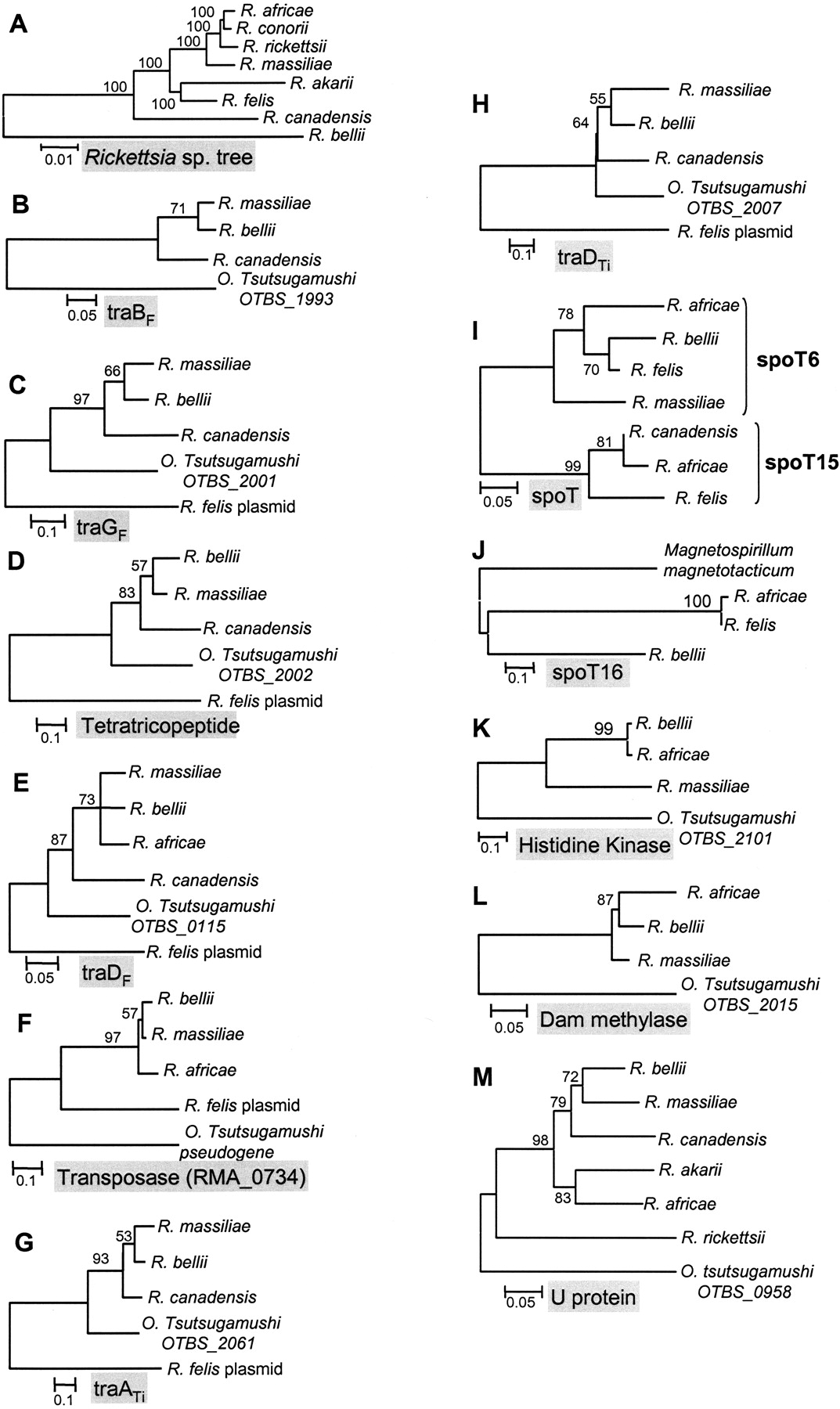
Phylogenetic relationships of the tra cluster genes. (A–M) Phylogenetic trees are constructed from protein sequences using the maximum-likelihood method. Models of substitution that best fit the data are as follows: JTT for D and M; JTT + Γ for C, E, and J; JTT + I for K; WAG + Γ for G; WAG + Γ + I for A; CpREV for B, F, and L; CpREV + Γ for I; RtREV for H. The Rickettsia species tree (A) is constructed from the concatenated alignment of 38 ribosomal proteins (6209 sites). Gene names and branch length scales (number of substitution per site) are shown below trees. Bootstrap support values, calculated over 500 alignment replicates, are given beside branches. Consecutive ORFs of pseudogenes (Table 1) were concatenated for the analysis. In addition to the Rickettsia sequences, the O. tsutsugamushi best BLASTP hit was included in the phylogenetic reconstructions when available (E-value < 1 × 10⁻¹⁰).



