


Cover image
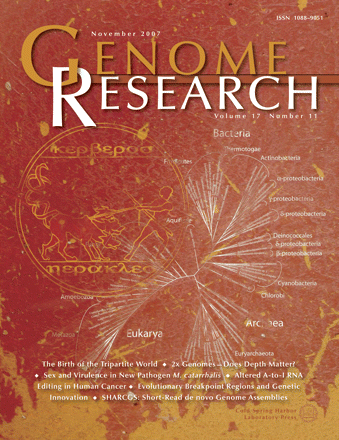
Cover Taming of Cerberus and the origins of the diversified world. A detailed phylogenomics analysis of the structure of protein architectures in proteomes reveals reductive tendencies in Archaea that are suggestive of the very early diversification of this lineage and establishes that the universal common ancestor of all life was architecturally complex and already harbored numerous biological functions. The study uncovers deep phylogenetic signals in the structure of proteins that root the Universal Tree of Life in Archaea. The image shows a universal phylogenomic tree chiseled on a fresco with proteomes grouping organisms into the three superkingdoms of life, Archaea, Bacteria, and Eukarya. The fresco captures the allegory of the monstrous three-headed Cerberus that guarded the gates to the underworld and its capture by Heracles in the last of his twelve labors. The symbolism embedded in the allegory conveys the discovery of the origins of a three-headed world that is reported in this issue. (Cover illustration by Derek Caetano-Anollés. [For details, see Wang et al., pp. 1572–1585.])

