


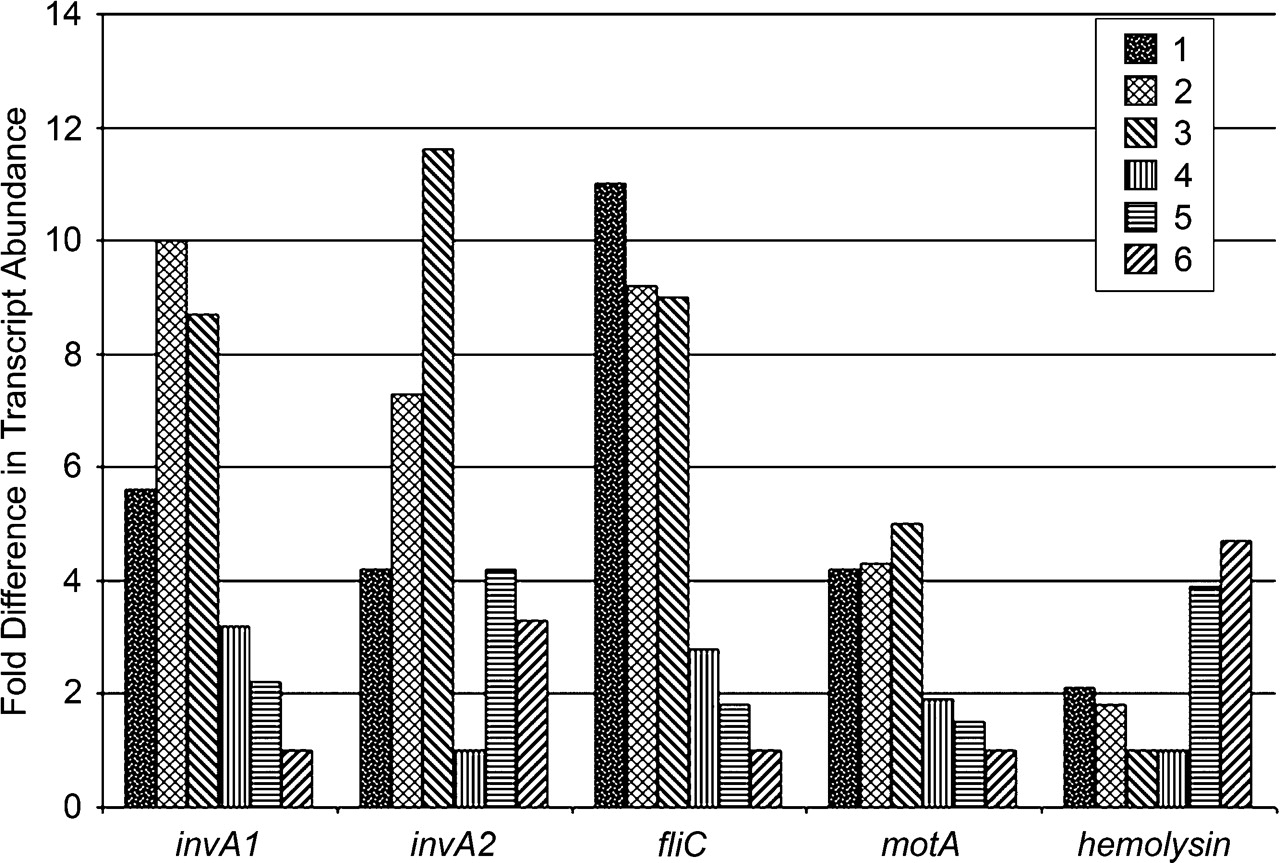
Analysis of gene expression representative of SSR, flagella, and putative effector functions during host development. Transcript abundance levels were determined for invA1, invA2, fliC, motA, and hemolysin expressed at the following host developmental stages: 1, early larvae; 2, late larvae; 3, early pupae; 4, late pupae; 5, 6-d-old adults; and 6, 40-d-old fertile females. Results for each gene were normalized against the host developmental stage, during which their expression was least abundant. The data are presented as bar graphs, which represent fold difference in transcript abundance. No invA3 transcripts could be amplified from these cDNA pools tested (data not shown).


