


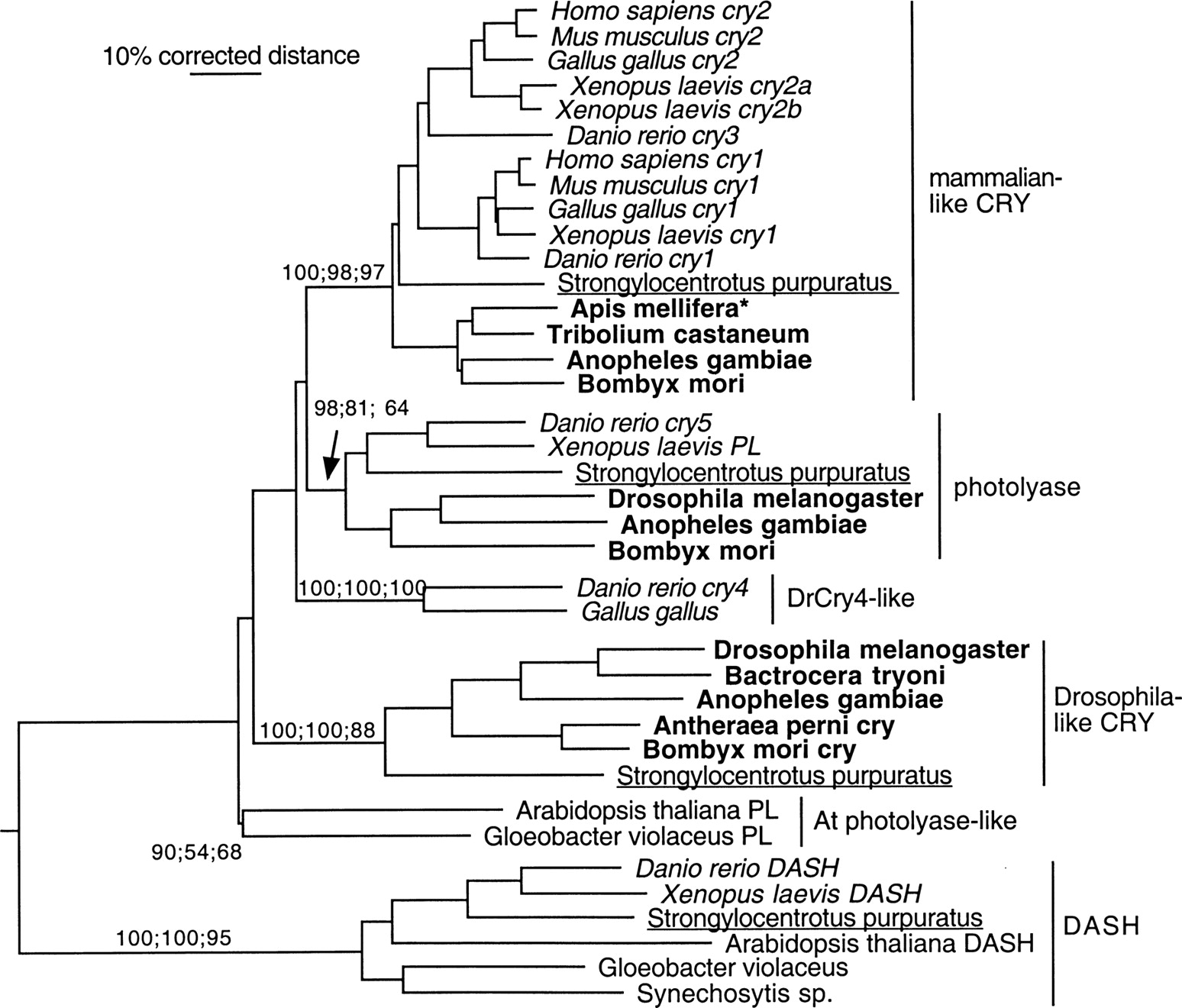
Figure 3.
Phylogenetic relationships of animal Cryptochrome and related Photolyase proteins. We used the CRY-DASH protein family as an outgroup to root the tree (based on its position in a larger tree that was rooted with another distantly related photolyase protein lineage that is present in insects and vertebrates) (data not shown). We termed the mammalian-like CRY proteins “CRY-m” and the Drosophila-like proteins “CRY-d.” For additional details, see legend to Figure 1.



