


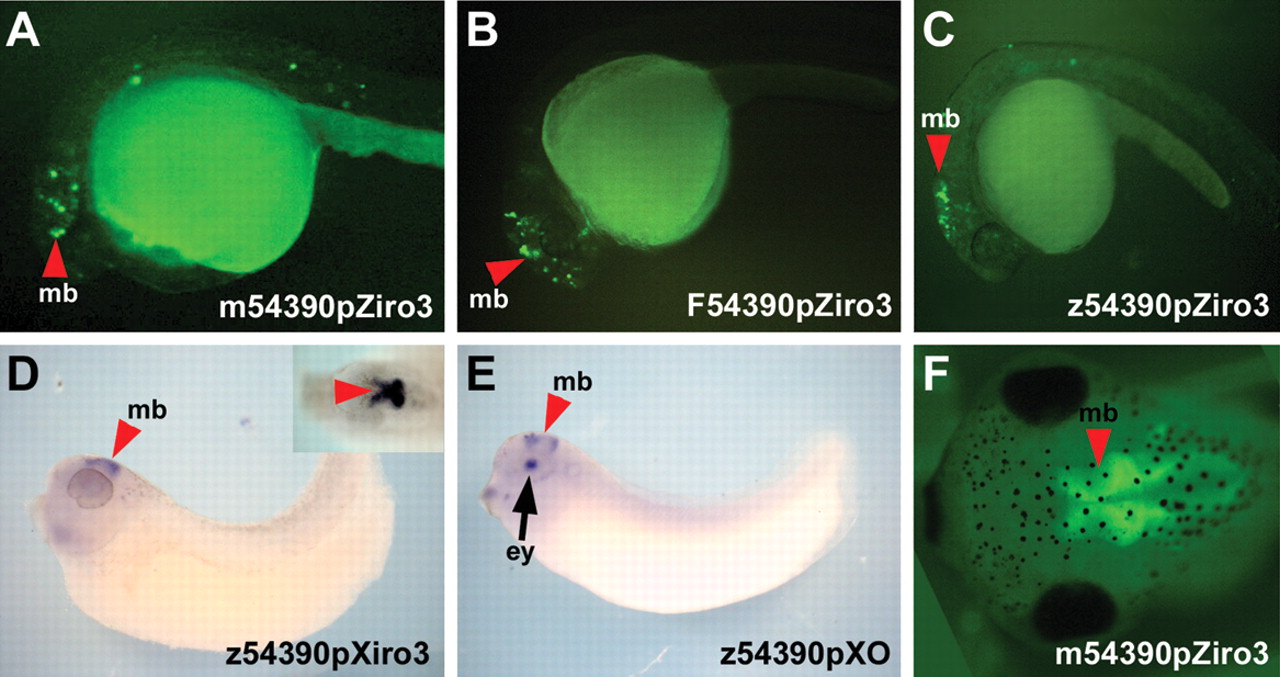
Highly conserved non-coding regions (HCNRs) are functionally active in different vertebrates. (A–C) Lateral views of 24-hpf zebrafish showing of enhanced green fluorescent protein (EGFP) fluorescence in the midbrain (mb) promoted by mouse (A), Fugu (B), or zebrafish (C) HCNR 54390. (D–E) Zebrafish 54390 placed 5′ of Xenopus Irx3 (D) or opsin (E) promoters activates EGFP expression in the same midbrain (mb) domain. Inset in D shows a higher magnification of a dorsal view of the embryo. The opsin promoter also activates EGFP expression in the eye (ey) (arrow in E). (F) Dorsal view of a stage 45 Xenopus embryo transgenic for the mouse 54390 region. EGFP expression is detected in the midbrain (mb).



