


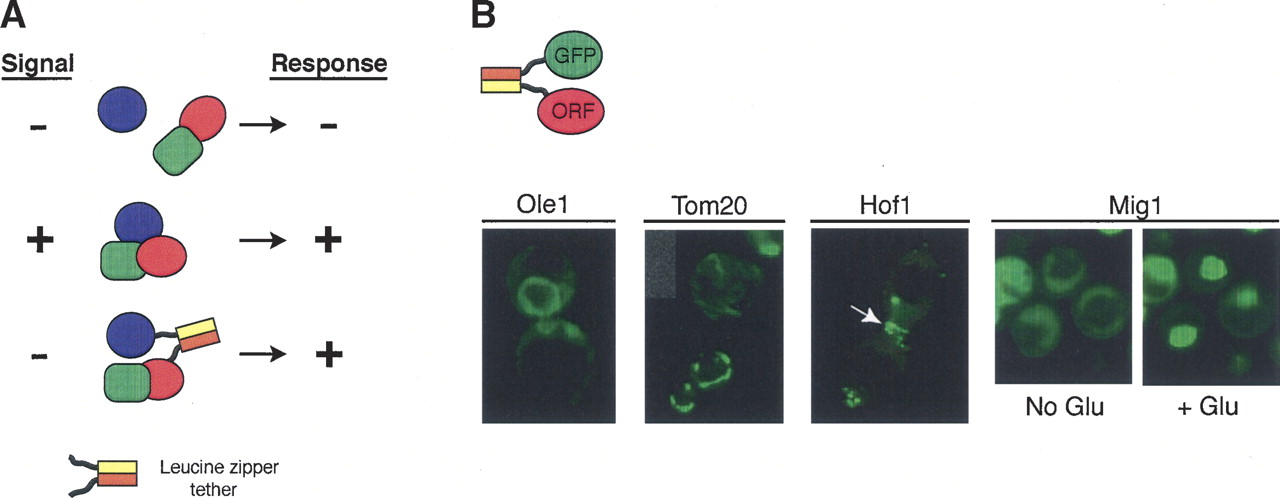
Fos and Jun leucine zippers can be used to force proteins to associate. (A) A generalized example of the method. For a signal transduction pathway, a forced interaction might mimic the native interaction that occurs between components of the pathway and as a result cause the same downstream sequence of events, as in this example, activation of the pathway in the absence of signal. (B) Fos and Jun cause GFP to colocalize with various yeast proteins. GFP fluorescence was imaged by fluorescence microscopy of cells coexpressing a Fos-GFP fusion and Jun fused to the indicated protein. Cells expressing the Mig1 fusion were grown in the absence of glucose and then were placed on a thin agar pad containing glucose on a microscope slide. The cells were imaged immediately (no glucose) and then again in 2 min (+ glucose) without changing the field of view.



