


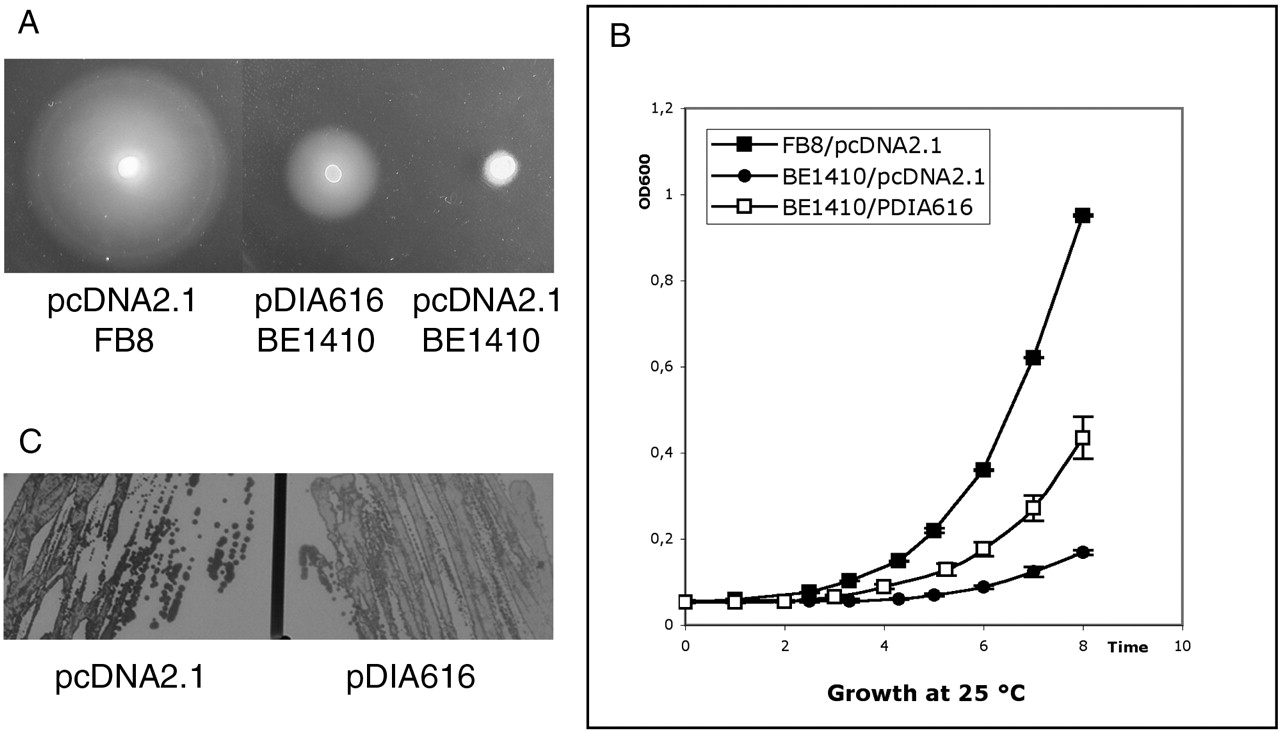
hns complementation in E. coli with P. haloplanktis csrA. A DNA fragment encompassing P. haloplanktis gene csrA with 140 bp of its upstream region was cloned into plasmid pcDNA2.1 (pDIA616) and the phenotypes of the resulting E. coli hns transformants were compared to the hns mutant (BE1410) and to the wild-type FB8 parental strain. (A) Motility assay: Partial motility is restored with the csrA gene of P. haloplanktis. Other phenotypes such as serine sensitivity of the hns mutant are restored by the csrA gene as well. (B) Growth at 25°C: overnight cultures were diluted to 0.05 OD600 in LB medium with ampicillin 100 μg/mL, and growth was monitored (as in Dersch et al. 1994). Significant improvement of growth is witnessed with the csrA gene of P. haloplanktis. (C) CsrA-dependent storage of glycogen in E. coli MG1655. Expression of P. haloplanktis csrA inhibits glycogen storage (light iodine color, right panel).


