


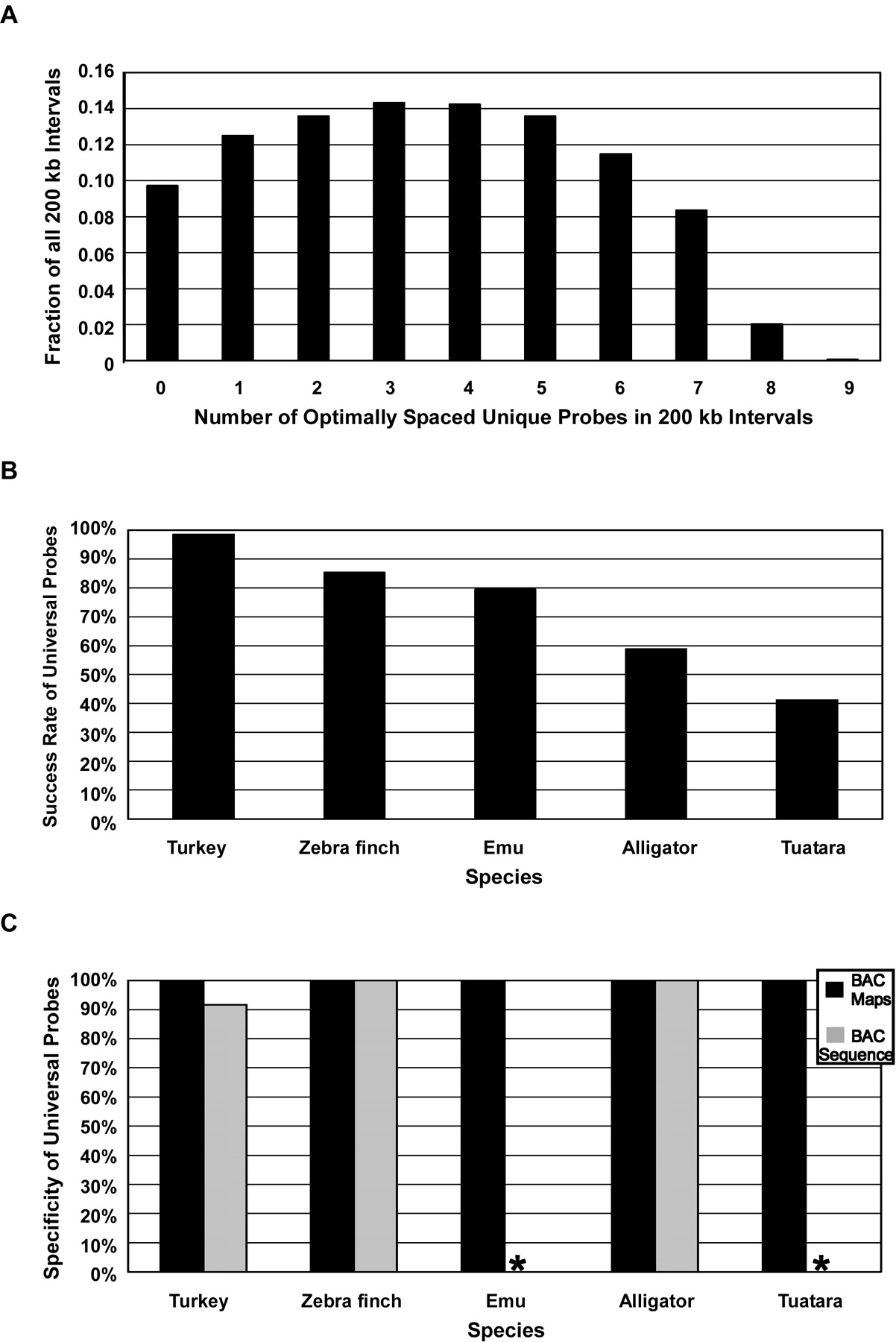
Characterization of the bird/reptile whole-genome universal hybridization probe set. (A) To estimate the fraction of the chicken genome associated with one or more bird/reptile universal probes, the number of unique probes selected using an optimal spacing parameter of 30 kb in all 200-kb windows (50-kb slide) across the genome, excluding intervals that contained a clone or centromere gap, was determined. The result of that analysis was plotted as the fraction of all 200-kb intervals that included N number of optimally spaced unique probes. (B) To estimate the ability of the universal probes to identify a BAC clone from avian/reptilian libraries, a sample of n = 68 universal probes was hybridized to a panel of five bird and reptile BAC libraries. The success rate, as defined by the percentage of universal probes that detected at least one positive BAC clone, for each of the five species is indicated. (C) Specificity of the universal probes as measured by physical mapping, and sequence analysis of individual isolated BAC clones is indicated. The number of BAC sequences included in the analysis for each species is as follows: turkey, n = 12; zebra finch, n = 15; and alligator, n = 6. *No BAC sequence is available for emu and tuatara.



