


Cover image
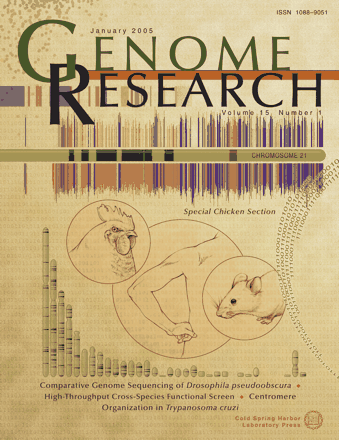
Cover Functional dichotomy of gene deserts in the human genome as defined by comparative sequence analysis with the chicken genome. The top of the figure displays the distribution of stable and variable gene deserts on human chromosome 21 depicted as dark red and black bands, respectively. Human–chicken (top) and human–mouse (bottom) conservation profiles from the ECR Browser (ecrbrowser.dcode.org) run alongside the chromosome. Purple and orange spikes represent coding and noncoding evolutionary conserved regions (ECRs), respectively. Both categories of human gene deserts are well conserved in mice, but only stable gene deserts are preserved at high levels of sequence identity in chicken. The distribution of stable gene deserts on different chicken chromosomes present at the bottom of the figure highlights an unexpected large number of stable gene deserts on chicken microchromosomes. The comparative analysis of stable and variable gene deserts suggests that stable gene deserts are densely populated by distant regulatory elements vital to the activity of neighboring genes, while variable gene deserts lack any apparent biological function and are more likely to diverge faster over large evolutionary distances. The use of bioinformatics is schematically illustrated as an arch of 0's and 1's. (Cover illustration by Bang Wong, ClearScience/www.clearscience.info. [For details, see Ovcharenko et al., pp. 137–145.])

