


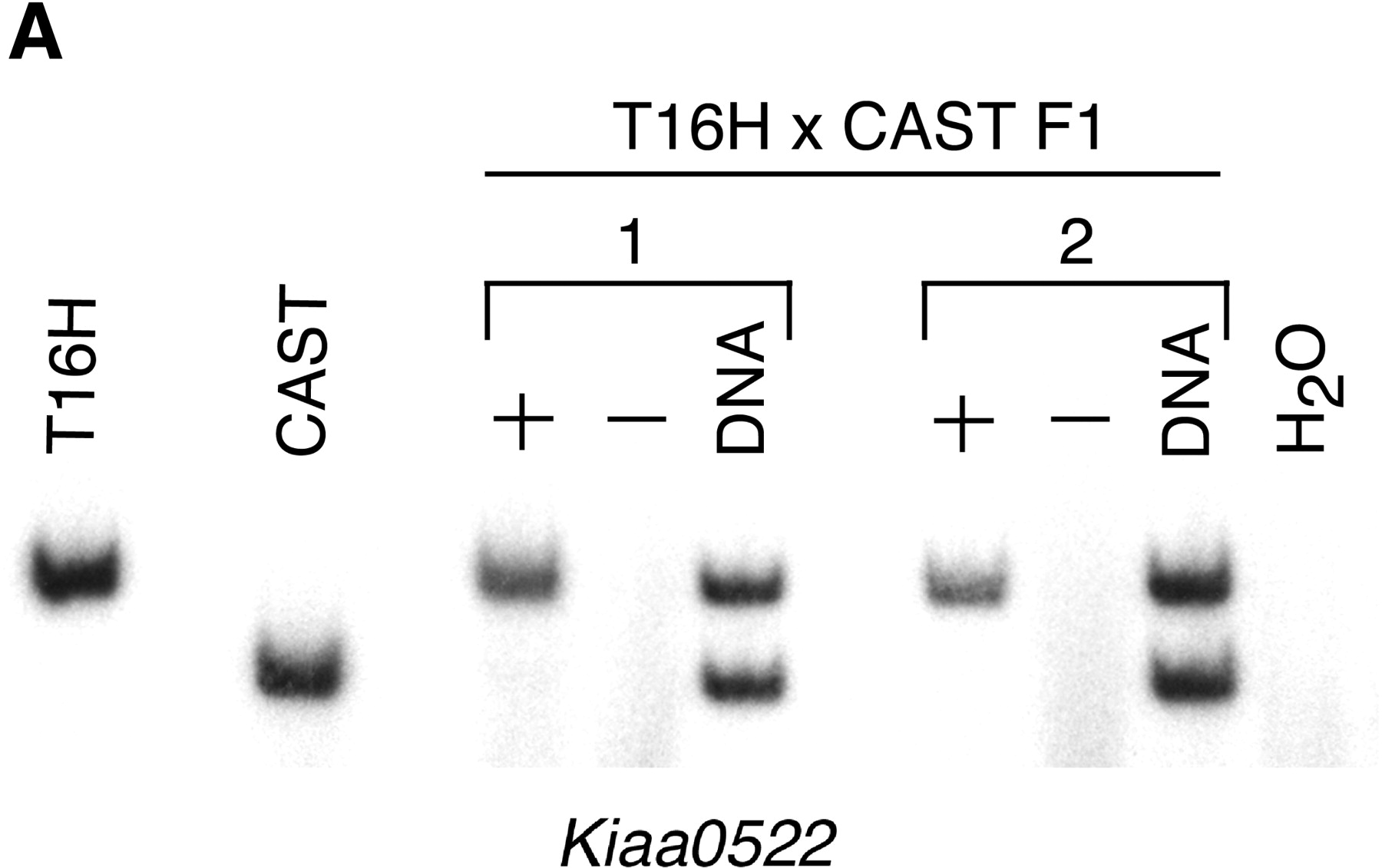
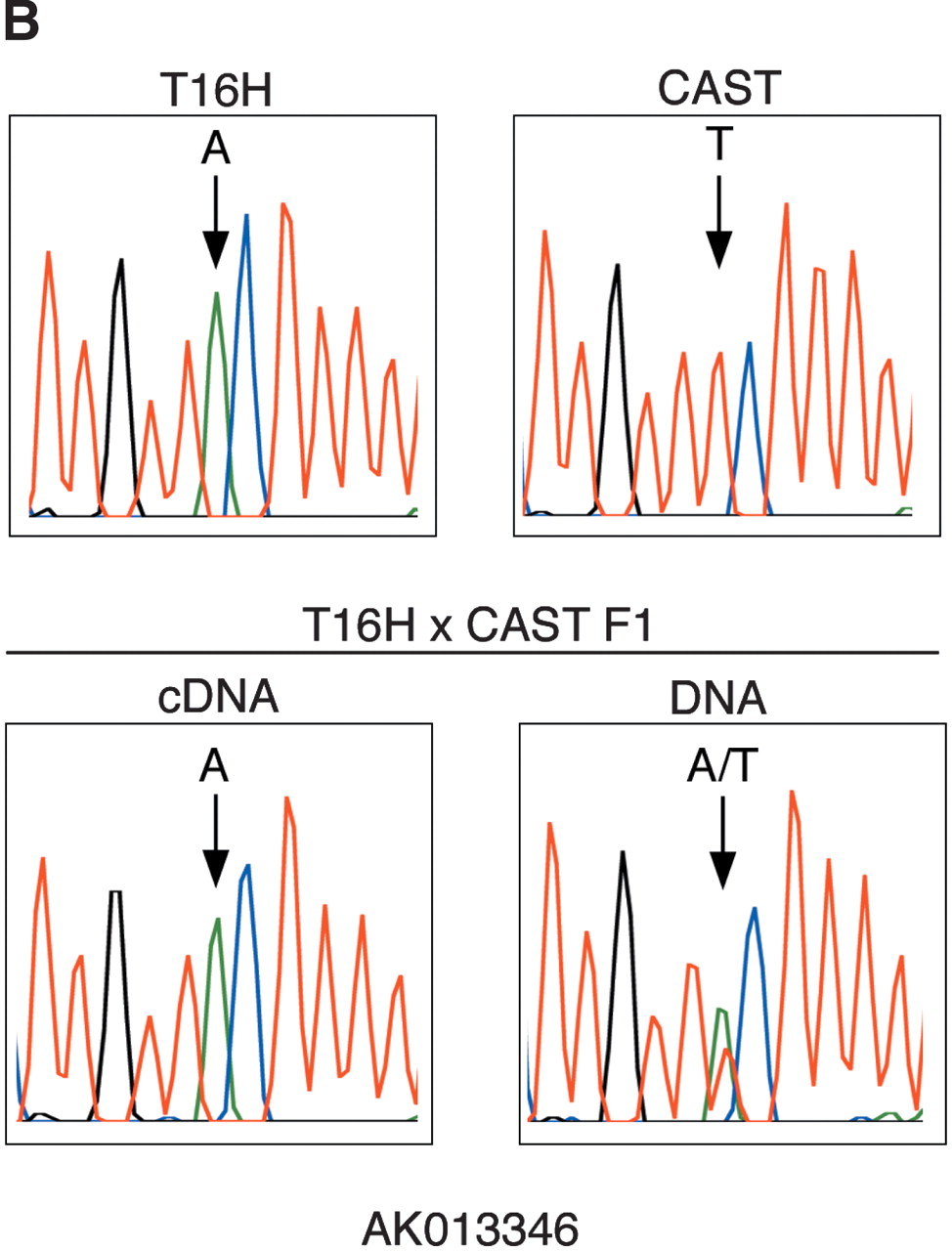
X-inactivation analyses of representative mouse transcripts. (A) Inactivation status of Kiaa0522 was determined by digesting RT-PCR products with BlpI to distinguish T16H from CAST alleles. T16H and CAST are parental controls. + and – represent RT-PCR reactions performed with and without reverse transcriptase. Only the T16H (active X) allele is expressed in T16H × CAST F1 females, demonstrating inactivation of the CAST allele of Kiaa0522. DNA from the F1 females was also amplified and digested to verify the presence and equal amplification of both alleles. Results from two different F1 females are shown. (B) Inactivation status of AK013346 was determined by sequence analysis of RT-PCR products to distinguish the T16H and CAST alleles, which differed by an A/T polymorphism. DNA sequence from a T16H × CAST F1 female confirms the presence of both alleles, whereas cDNA sequence from the same female reveals expression of only the T16H (active X) allele, consistent with inactivation of AK013346.



