


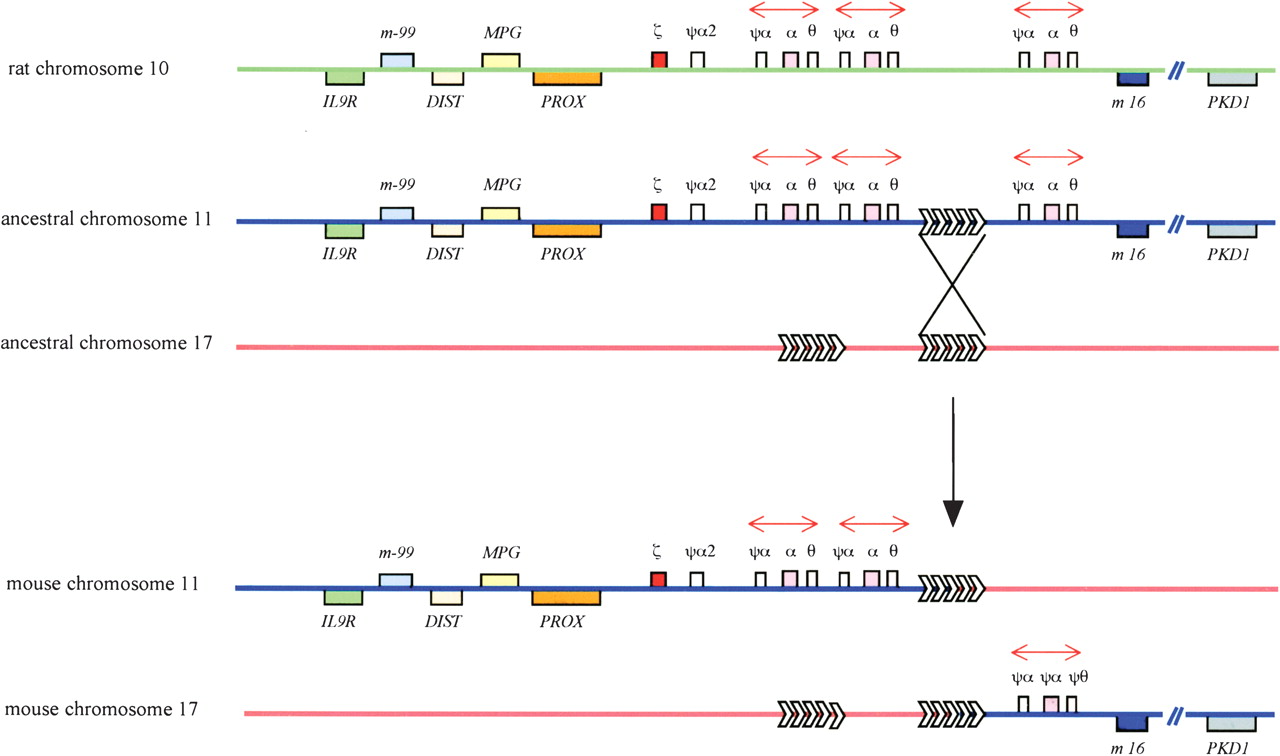
Figure 4
A possible model to explain the evolution of the mouse α cluster. In the top half are shown the structures of the present-day rat Chromosome 10 and of the hypothetical ancestral murine chromosomes. Genes are depicted as colored boxes with their corresponding names. The symbol indicates the blocks of tandem repeats. In the bottom half are shown the contemporary mouse Chromosome 11 and 17 gene structures. The double-headed arrows indicate the ψα-α-θ fragment that underwent duplication and divergence (ψα-ψα-ψθ). The drawing is not to scale. See text for additional details.


