


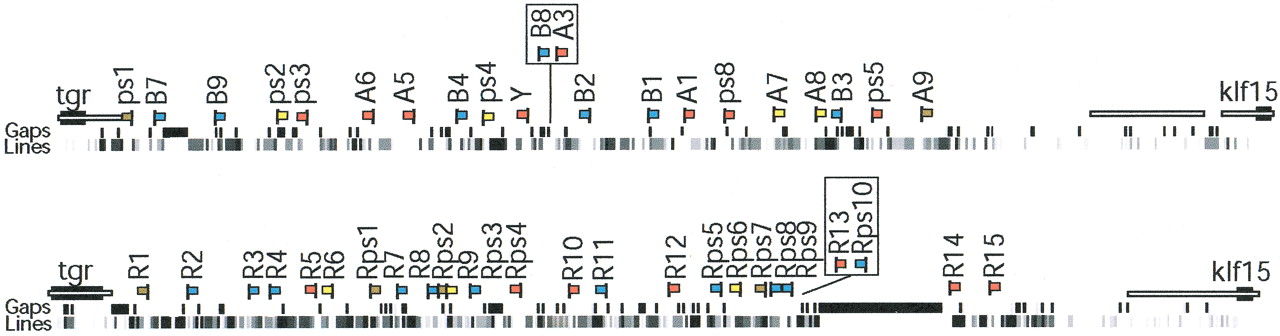
Synteny maps depicting rodent V1R clusters on mouse Chromosome 6 (90.2–90.9 Mb, February 2003 release, Mouse Genome Sequencing Consortium 2002) and rat Chromosome 4 (123.9–125.0 Mb, June 2003, Rat Genome Sequencing Project Consortium 2004). The V1R clusters in both species are immediately flanked by single-copy orthologs: the thioredoxin and glutathione reductase (tgr) gene and the Kruppel-like factor 15 gene (klf15). V1R genes are indicated by flags; the subfamily is indicated by color (red, A; blue, B; yellow, A7; gray, others). Pseudogenes are named with a “ps” and “Rps” prefix in mouse and rat, respectively. Mouse V1R nomenclature is derived from previous reports (Lane et al. 2002; Rodriguez et al. 2002), and the rat V1R genes are numbered according to position in the cluster. The mouse B8 and A3 genes and rat Rps10 and R13 genes (boxed) are not present in the current assembly and are positioned according to previous assemblies (Lane et al. 2002 for mouse, November 2002 and January 2003 sequence releases for rat). Because these maps are derived from draft sequences, the relative position and orientation of some of the genes should be considered tentative. L1 repeat content and gaps in the assembly are as reported in the UCSC genome browser (http://genome.ucsc.edu) and are shown beneath the maps. The relative order and orientation are known for all contigs. Contiguous synteny between the mouse and rat loci as determined by dot plots (data not shown) is indicated by unfilled bars on both maps; synteny extends beyond the tgr and klf15 genes.


