


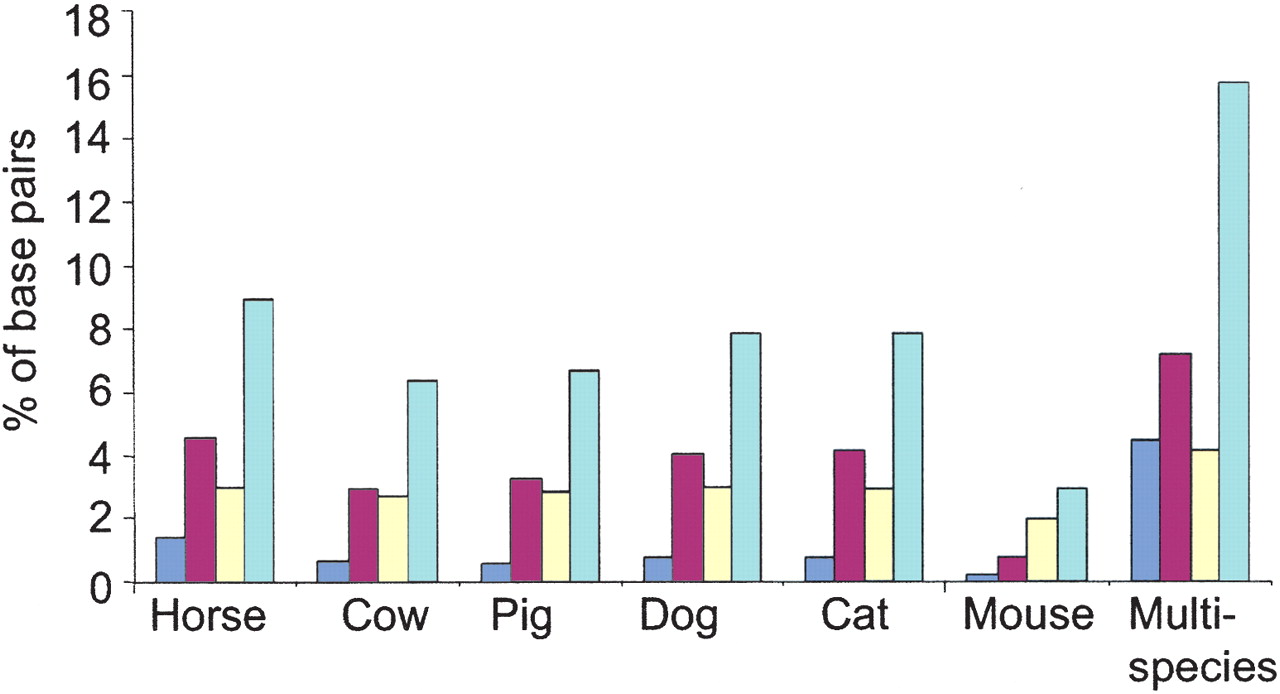
Evolutionarily conserved base pairs in a 365-kb region on human chromosome 21 containing the SIM2 locus. Six species are compared with human genomic DNA for evolutionary conservation. The multispecies data set represents the composite of conserved sequences identified in all six species. The bars represent the percent of the 365,000 bp that are in elements conserved (≥30-nt length and ≥60% conformance) between humans and different numbers of the six species. Base pairs conserved only between the indicated species and humans (unique, dark blue); base pairs conserved between humans and two to five species (limited, red); base pairs conserved in all mammals analyzed (common, yellow). Pale blue bars represent the total percent of base pairs conserved. For details see Supplemental information.



