


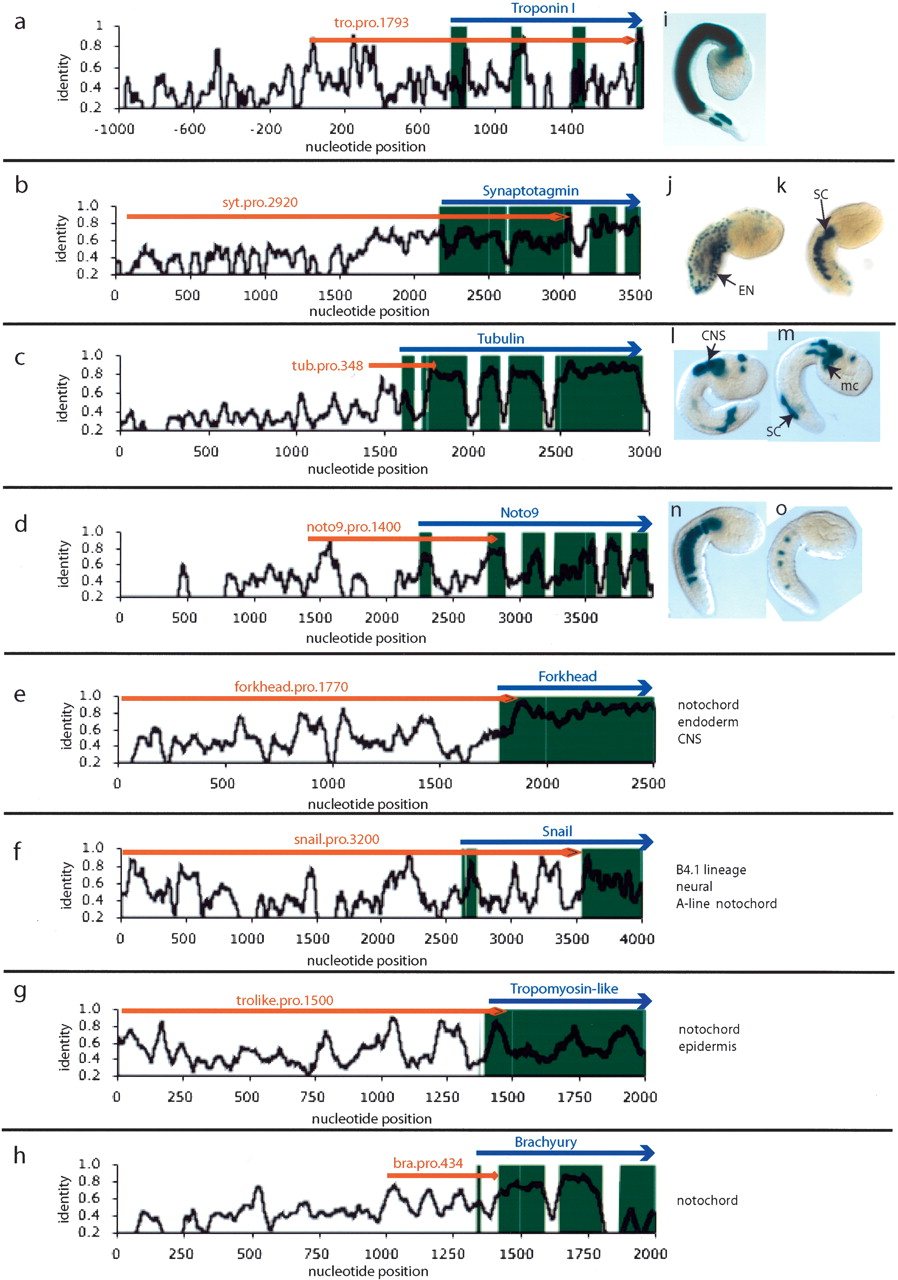
Five prime regions of eight Ciona loci. The black plots represent sequence identity between C. intestinalis and C. savignyi across each region. C. savignyi is the reference sequence for a–d, and C. intestinalis is the reference sequence for e–h. Green vertical bars correspond to annotated C. intestinalis exons. Blue arrows indicate direction of transcription of each gene. The red arrows indicate the native sequence present in the promoter fusion construct. Each promoter fusion construct contains significant regions of similarity between the two species. Expression patterns for C. savignyi constructs (i–o). Troponin I is strongly expressed in the tail muscle (i), Synaptotagmin is expressed in various neural lineages, including epidermal neurons (EN) (j) and spinal cord (SC) (k), α-tubulin is expressed in various tissues, including central nervous system (CNS) (l) and spinal cord (SC) (m), and ectopic expression frequently occurs in the mesenchyme (MC) (m), Noto9 is expressed specifically in the notochord (n,o). All embryos were fixed at the mid–late tailbud stages. Electroporated embryos always exhibit mosaic staining patterns. A variety of typical images are archived at http://mendel.stanford.edu/supplementarydata/johnson.



