


Cover image
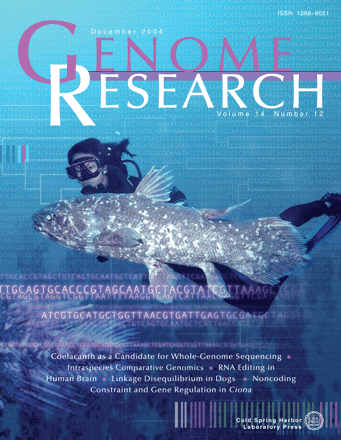
Cover The meeting of two distant relatives, an Indonesian coelacanth (Latimeria menadoensis) and a representative of Homo sapiens. Coelacanths, the famous "living fossils," are one of only two remaining lineages of lobe-finned fishes, the only extant sister group to terrestrial vertebrates. As such, coelacanths occupy a critical and highly informative position between ray-finned fishes, such as zebrafish, and tetrapods (represented by the phylogenetic tree in the background). A comparison of human, coelacanth, and zebrafish protocadherin clusters (colored blocks) indicates that the coelacanth genome is more similar to the genomes of land vertebrates than is any teleost genome. In this issue, it is argued that the sequence of the coelacanth genome is an essential tool for identifying the molecular events that accompanied the evolution of tetrapods from their aquatic ancestors. (Cover illustration by Bang Wong, ClearScience/ www.clearscience.info. Photo: Mark V. Erdmann. [For details, see Noonan el al., pp. 2397–2405.])

