


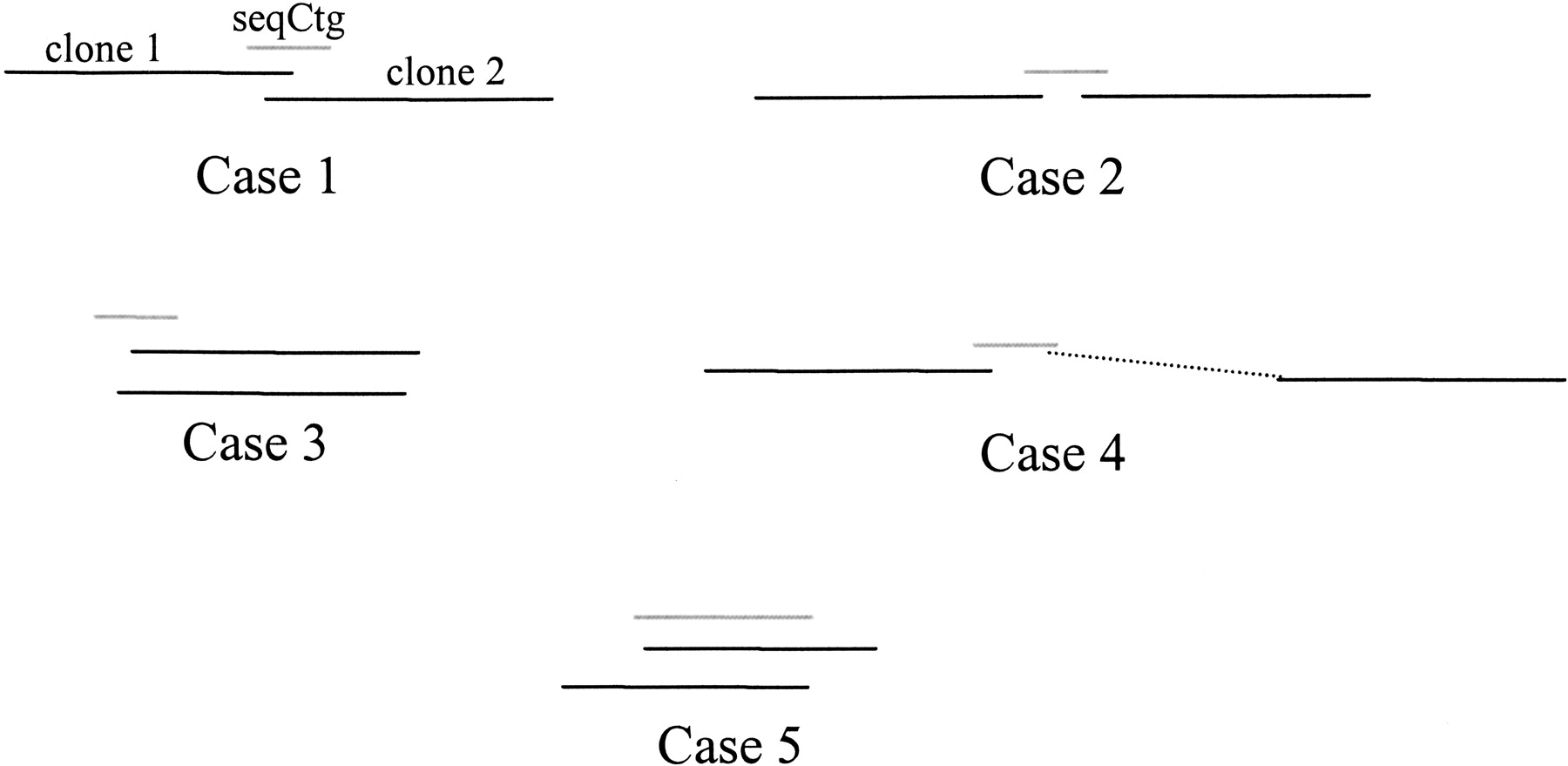
Figure 5
The five different types of pairs. Case 1 pairs consist of two overlapping clones, with the exact amount of overlap identified by the seqCtg. Case 2 clones have a gap between them; they are bridged by a seqCtg. In Case 3, the two clones cover a similar area. Case 4 pairs result from false positive hits. Case 5 pairs result from two small clones hitting on opposite ends of a long seqCtg; note this is similar to Case 1, but a large seqCtg may result in a large overlap.



