


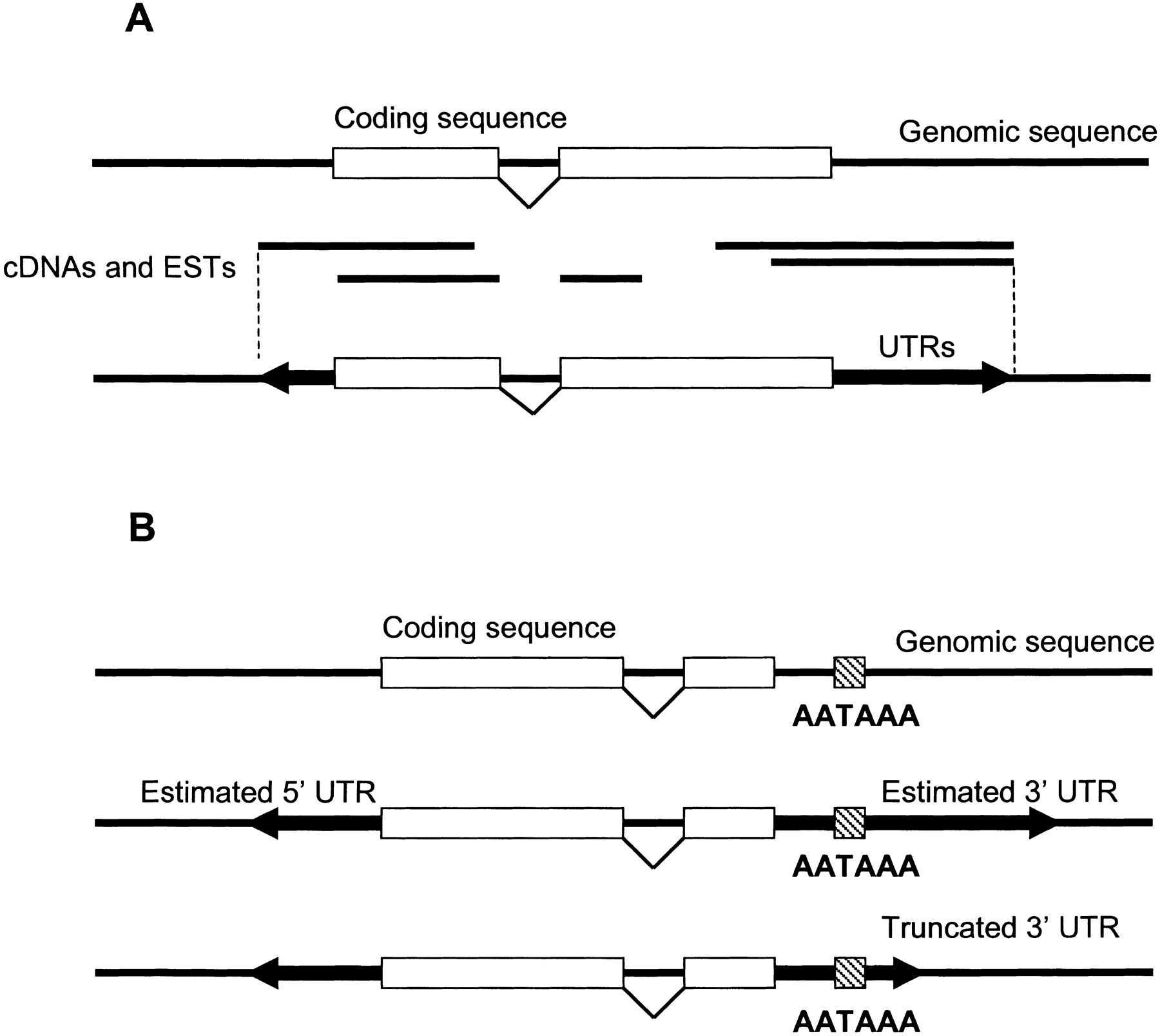
Conceptual transcript construction. Genomic sequence was used to form conceptual transcripts to take advantage of its high-sequence quality. Coding sequences were derived from current genomic annotation. (A) If expressed sequences that extend beyond the predicted coding sequence were available, the alignment position of these sequences was used to determine the extent of the UTR. (B) If no expressed sequences were available, D. melanogaster 5′ and 3′ UTRs were extended to 836 bp and 1039 bp, respectively, and C. elegans UTRs were extended to 388 bp and 574 bp. These UTR size estimates encompass 95% of known UTRs determined in A. If the polyadenylation signal “AATAAA” was found within the estimated 3′ UTR, the UTR was truncated 35 bp downstream of the signal.



