


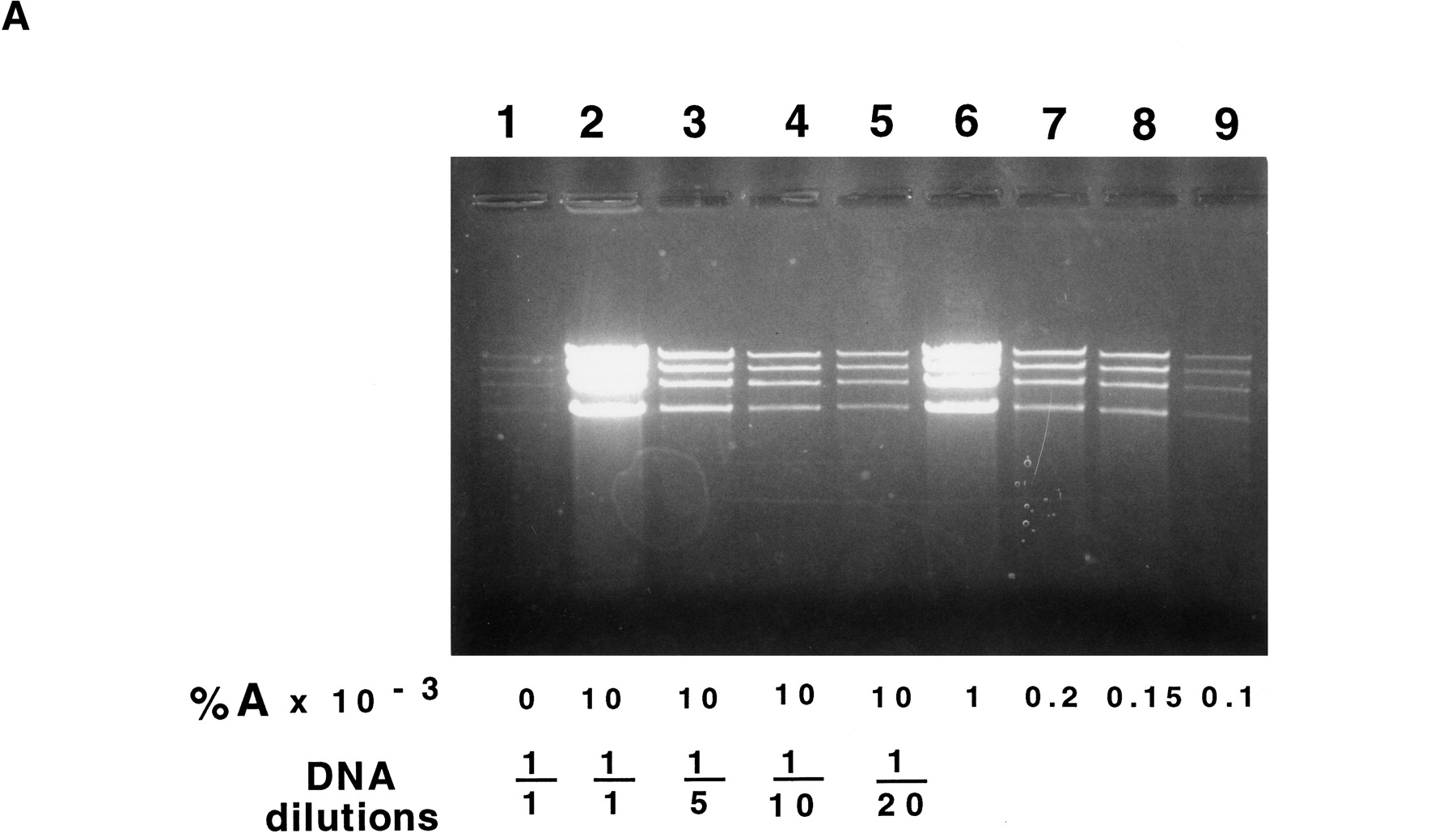
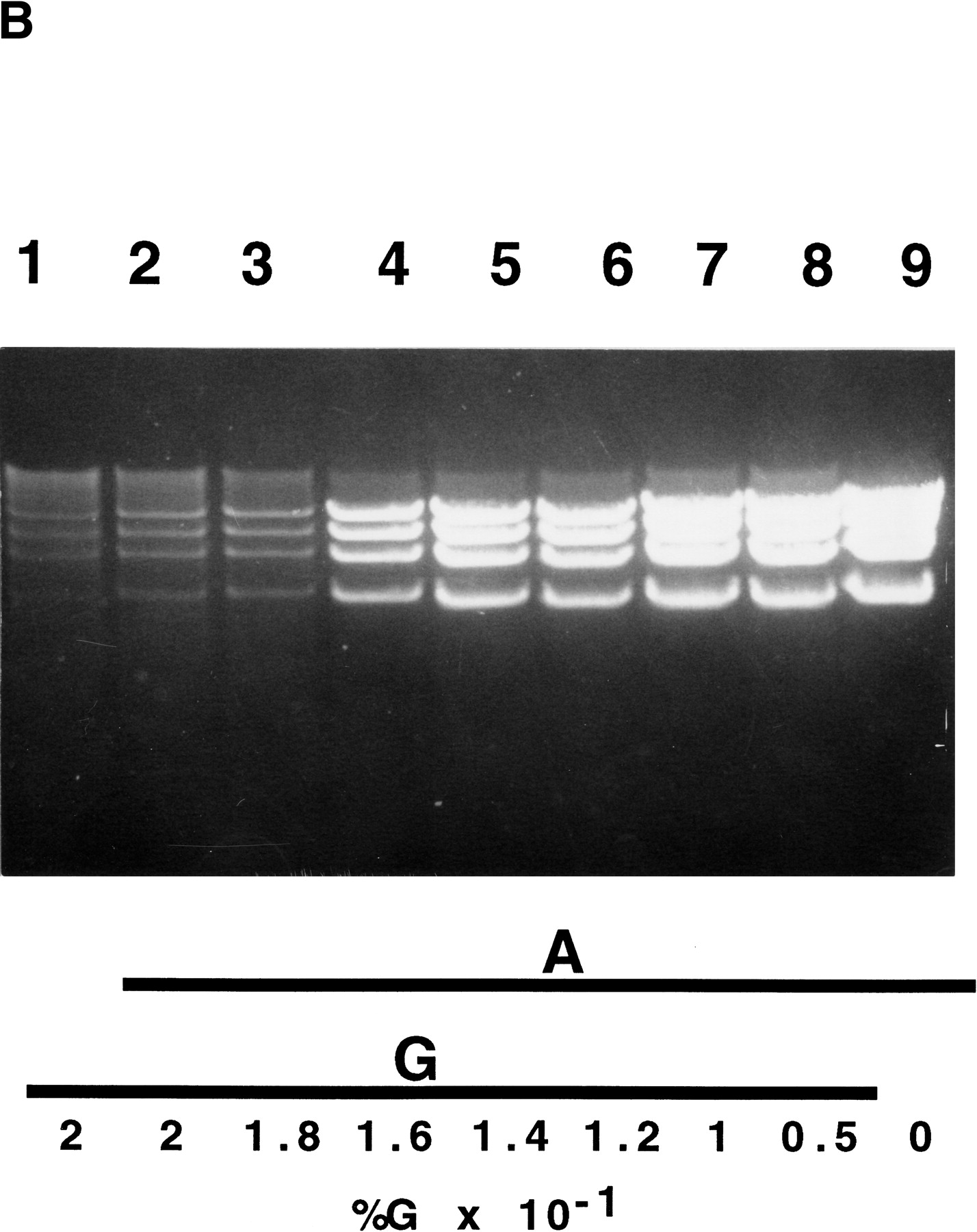
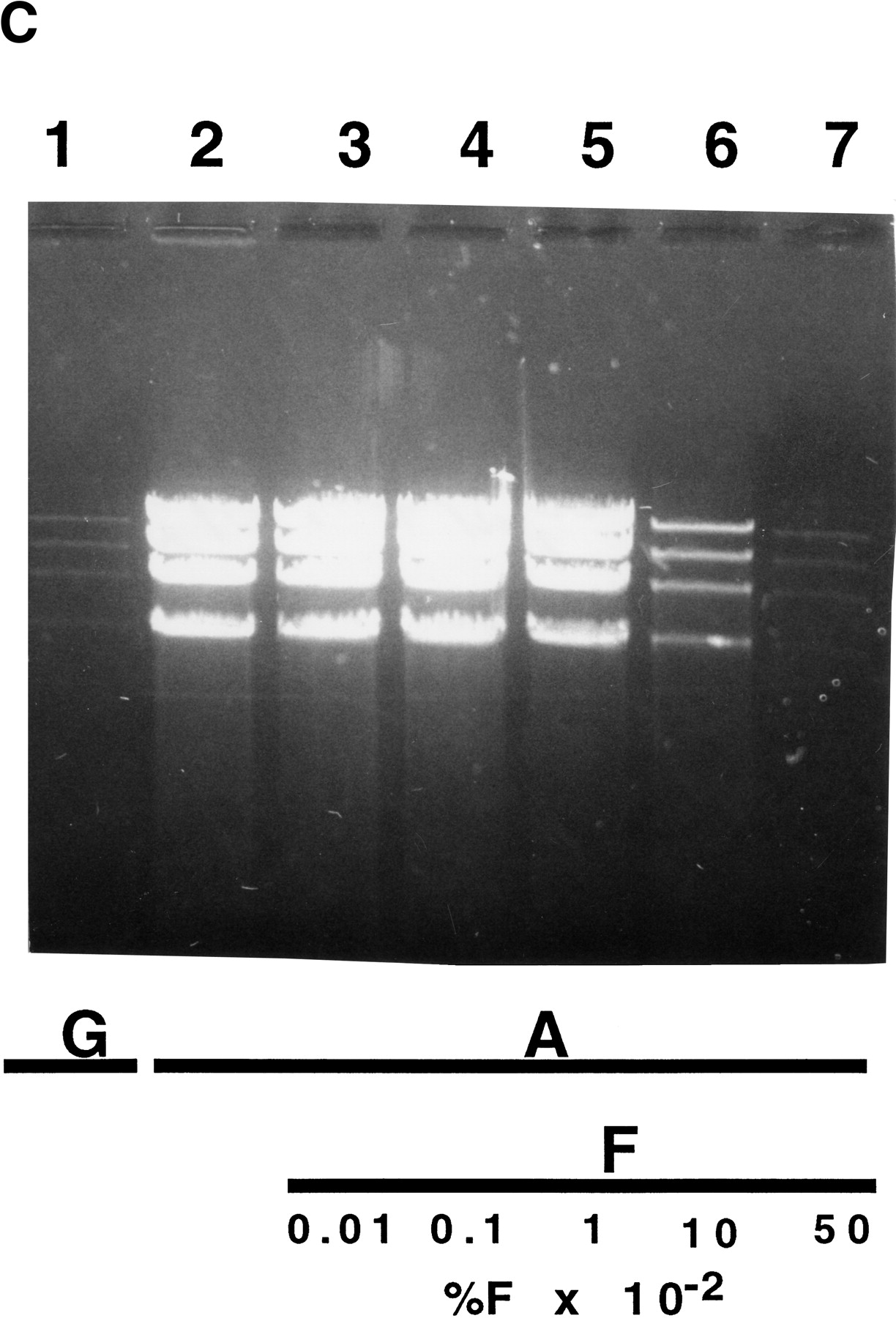
Effects of L-arabinose, D-glucose, and D-fucose on the amplification of the pBAC/oriV with a 20-kb insert. (A) Induction by L-arabinose (A). Strain JW378 (pBAC/oriV + 20-kb insert) was grown in LB medium (LB) supplemented with various concentrations of A. Induction, DNA extraction, and digestion were performed as described in Methods and in the legend to Figure 4A (lanes 4–6). (Lane 1) No inducer present in LB; (lanes2–5) LB + 0.01% A. (Lane 2) An undiluted DNA sample was run; (lanes 3–5) DNA samples were diluted 5-, 10-, or 20-fold, respectively, prior to the SalI digestion; (lanes 6–9) LB supplemented with 0.001%, 0.0002%, 0.00015%, or 0.0001% A, respectively. By comparing the DNA bands in lanes 1 and 5, we estimate that DNA amplification was ∼80-fold. (B) Inhibition of amplification by D-glucose (G). Strain, experimental design, and abbreviations are as in description of A. (Lane 1) No A added, LB + 0.2% G; (lanes 2–8) LB was supplemented with 0.01% A and with 0.2, 0.18, 0.16, 0.14, 0.12, 0.1, or 0.05% G, respectively; (lane 9) LB supplemented only with 0.01% A. (C) Inhibition of amplification by D-fucose (F). Strain, experimental panel design, and abbreviations are as in description ofA. (Lane 1) LB + 0.2% G only; (lanes 2–7) LB + 0.01% A, supplemented with none, 0.0001%, 0.001%, 0.01%, 0.1%, or 0.5% F, respectively.



