


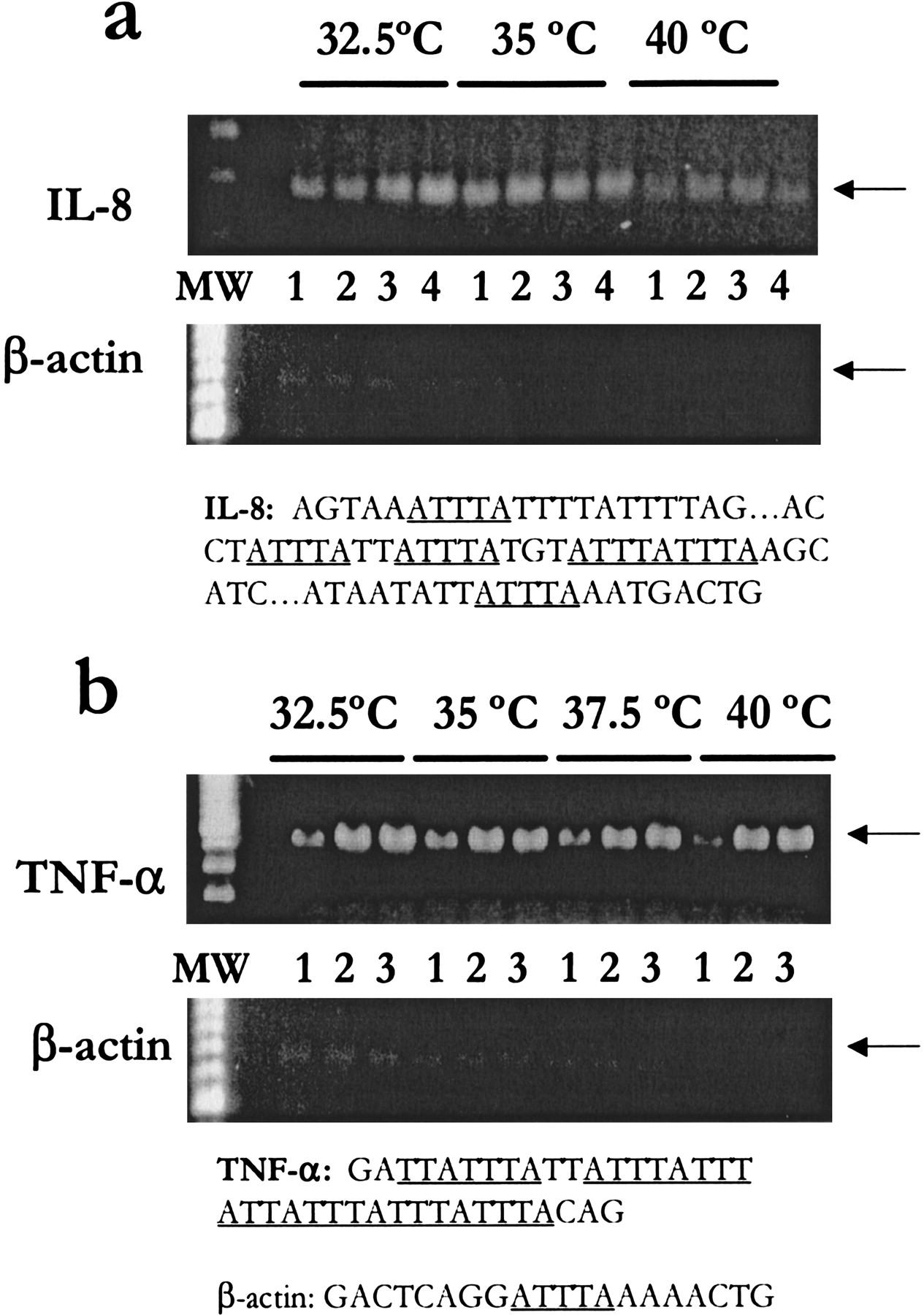
Effect of initial annealing temperature and number of cycles on selectivity of the discontinuous and continuous ARE amplified products. Total RNA samples (1 μg) from LPS and CHX-treated THP-1 cell line were extracted and subjected to RT using MMLV. Forty ng cDNA was used for the ARE-cDNA PCR using the 5′ primer Ca (Table 1) and the 3′ ARE primer using different initial annealing temperatures (first four cycles) followed by a different number of cycles (lane 1, 20 cycles; lane 2, 25 cycles; lane 3, 30 cycles; lane4, 35 cycles) at high annealing temperature (60°C). Aliquots of the amplified ARE products were subjected to PCR at stringent conditions specific to IL-8 (a) or TNF-α (b) in addition to β-actin to monitor selectivity of ARE-mRNA amplification. The specific amplified product of IL-8 is not attributable to cDNA carryover from original cDNA because PCR from the amount of carryover cDNA (4 ng) failed to show detectable IL-8 and TNF-α messages at the same PCR conditions (data not shown). Arrows indicate the predicted size of IL-8 (289 bp), TNF-α (548 bp), and β-actin (642 bp). MW: 100-bp size marker.



