


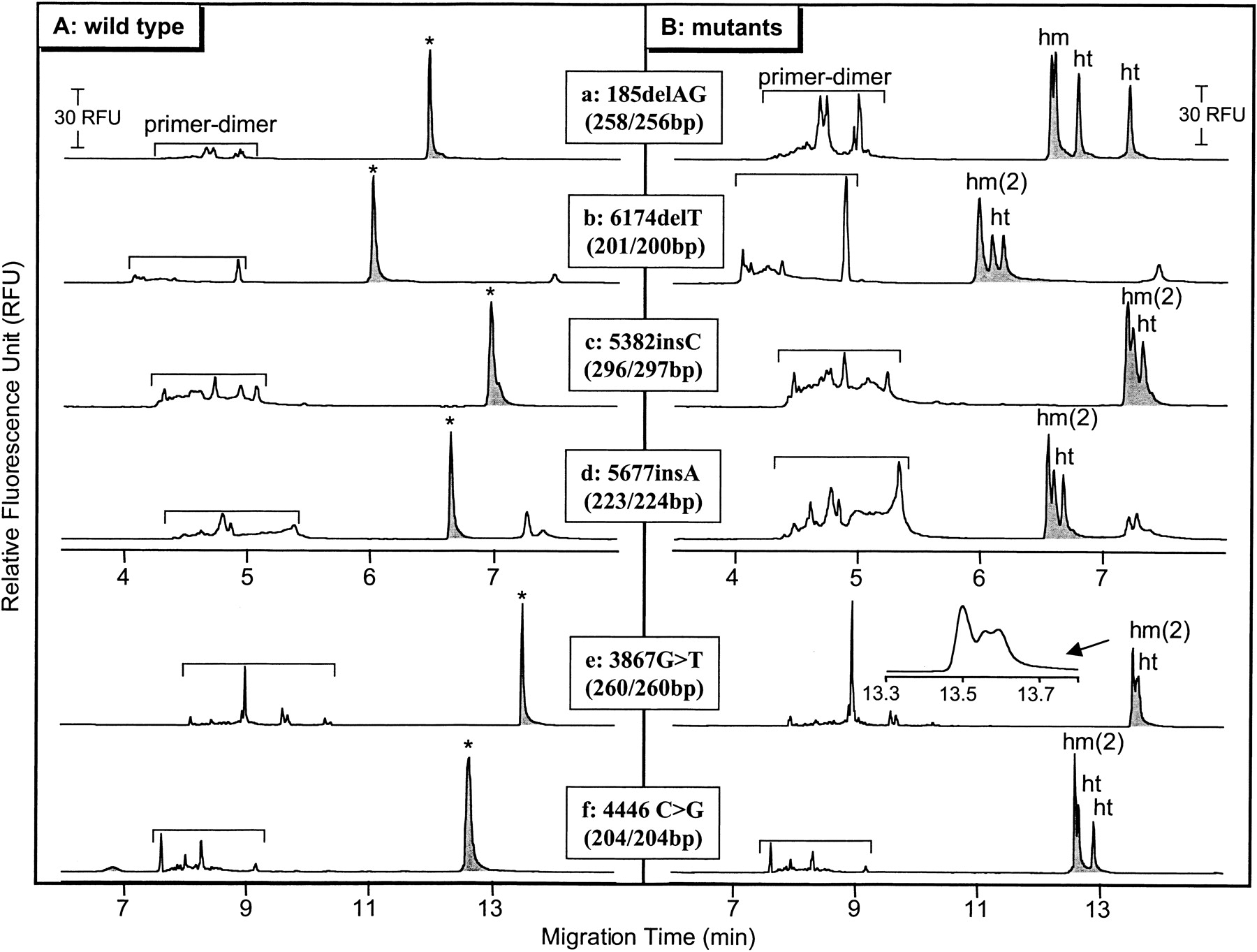
Capillary electrophoresis–based heteroduplex analysis of six heterozygous mutants. Panels (A) and (B) show the heteroduplex analysis results with the wild type and the mutants specified in the figure. For (a–d), the separation buffer consisted of 2.5% HEC containing 10% glycerol in 1 × TBE (pH = 8.6); the injection time was 20 sec at 370 V/cm, the capillary length was 27 cm (effective capillary length was 20 cm), the separation carried out at 370 V/cm with the separation temperature at 30°C. For (e) and (f), the separation buffer consisted of 4.5% HEC containing 10% glycerol and 15% urea; the injection time was 20 sec at 270 V/cm, the capillary length was 37 cm (effective capillary length was 30 cm), the separation was carried out at 351 V/cm with the separation temperature at 20°C. Other CE conditions were as in Fig. 1.


