


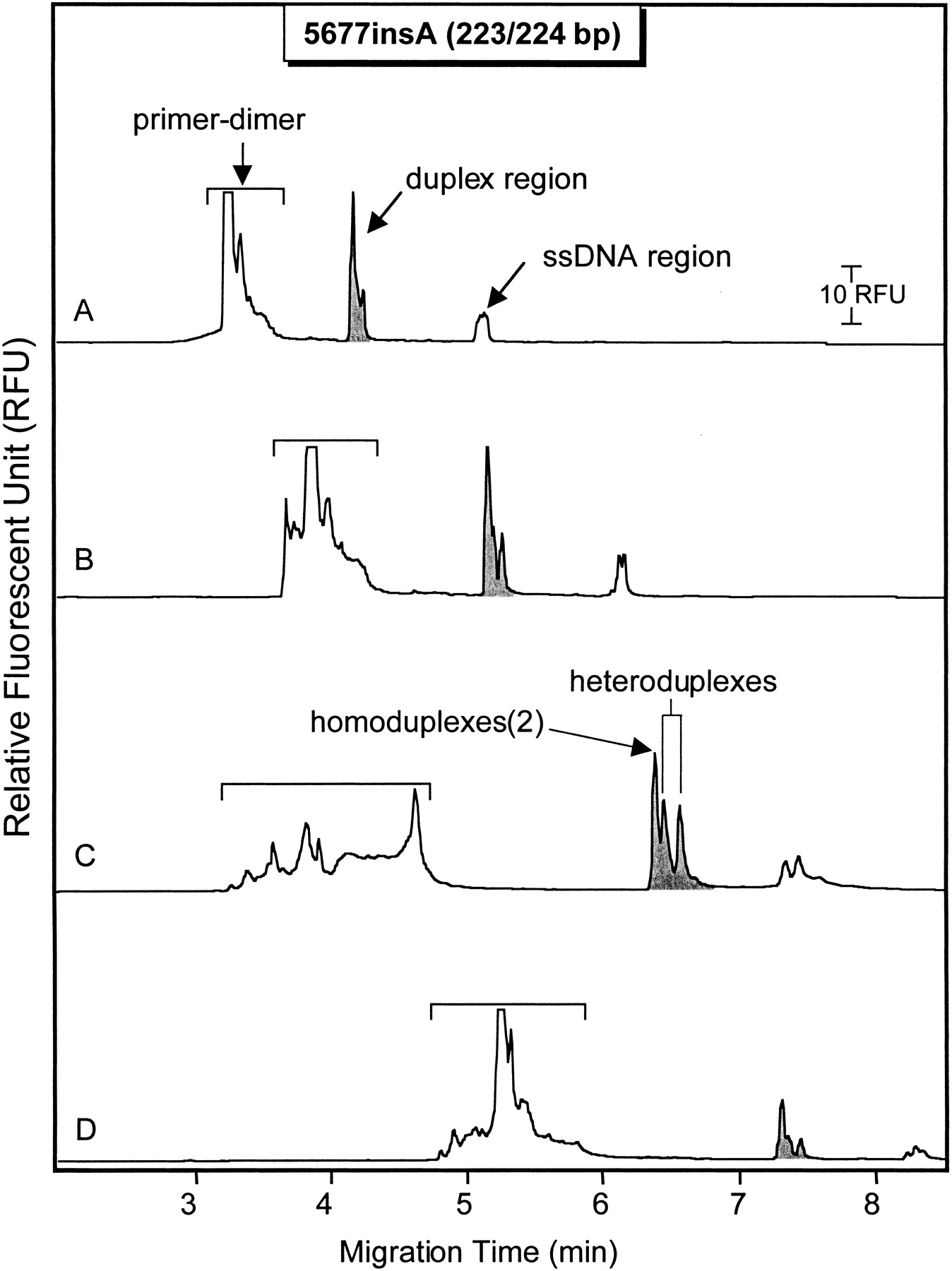
Effect of glycerol on capillary electrophoresis-based heteroduplex analysis of 5677insA mutant. PCR conditions were described within the text. CE conditions were as following: the FC-coated capillary was 50 μm (I.D.) by 27 cm (effective length was 20 cm); PCR products were directly injected into the capillary for 20 sec at 370 V/cm. The separation was carried out at 370 V/cm using the reversed polarity (inlet as cathode and outlet as anode), and the capillary was maintained at 30°C. LIF detection (em/ex: 520 nm/ 488 nm) was used. The separation buffers were 2.5% HEC (Mr 360,000) in 1 × TBE buffer (pH = 8.6) containing the additive, glycerol as following: (A) no glycerol, (B) 5% glycerol, (C) 10% glycerol, (D) 15% glycerol. Shaded areas represent the duplex regions.


