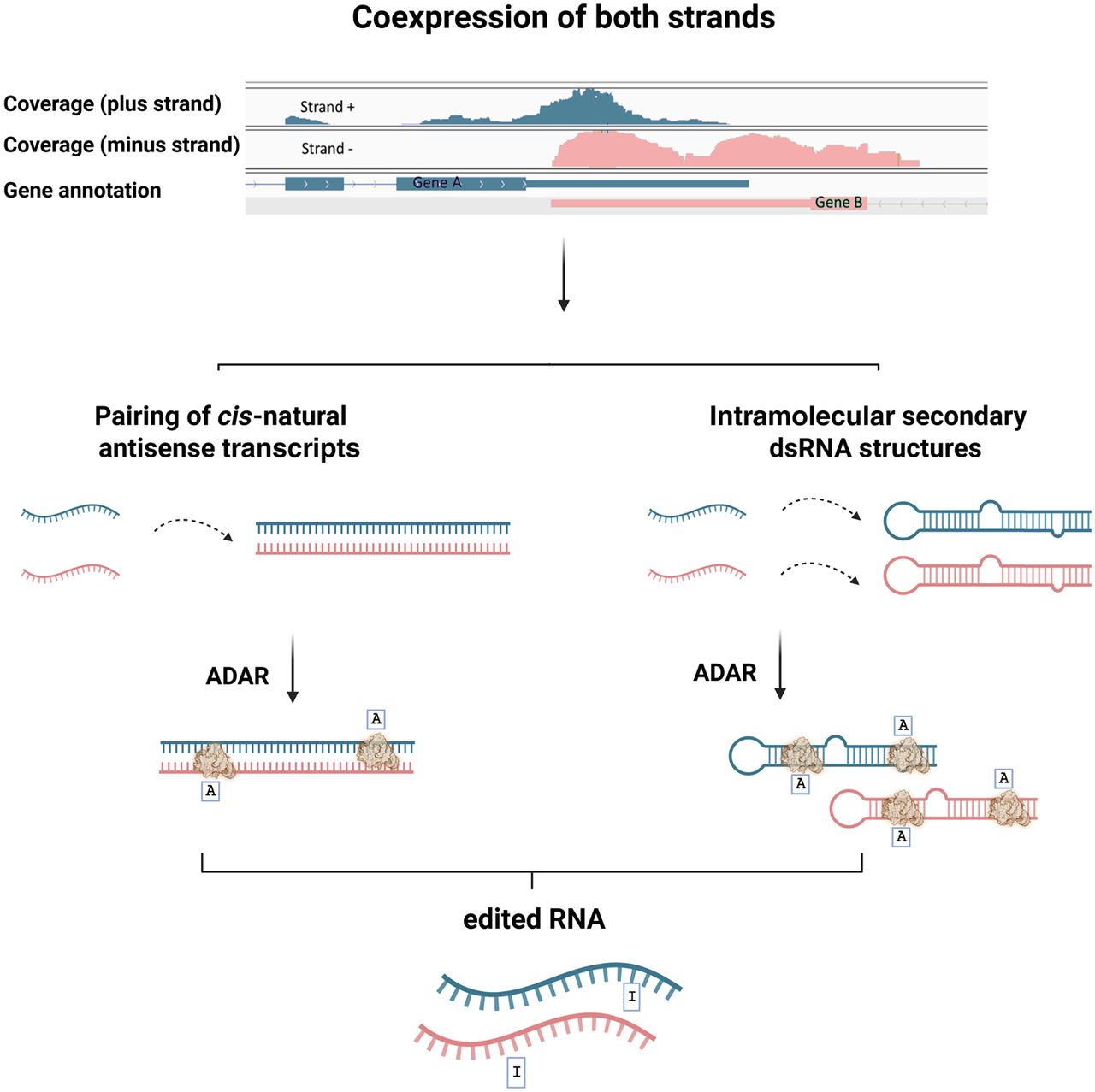
Figure 1.
Exploring the nature of ADAR substrates in regions where both strands are expressed. A double-stranded RNA (dsRNA) structure, essential for ADAR activity, may arise from either intramolecular folding of the transcript or pairing with a naturally occurring antisense transcript. (Top) We identify genomic regions exhibiting expression of both the plus (green) and minus (pink) strands. (Middle) dsRNAs may form due to intermolecular pairing of antisense transcripts (left) or intramolecular secondary structures (right). In both cases, ADAR may bind and edit the dsRNA structures. In this work, we aim to map systematically the scope of cis-NAT dependent editing.