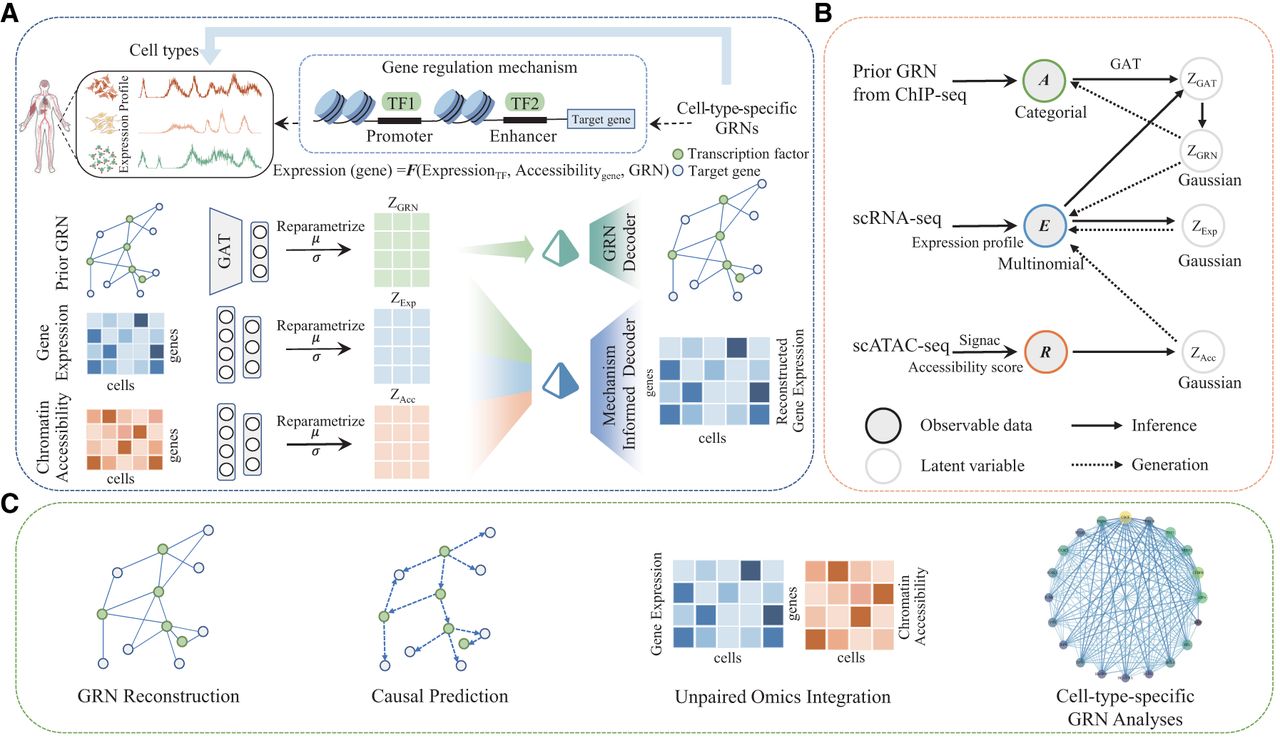
The framework of PRISM-GRN. (A) The motivation of PRISM-GRN. Within the same cell type, a gene's expression is influenced by the expression levels of the TF targeting it and the accessibility of its chromatin through the cell type–specific GRN. This regulatory mechanism shapes distinct gene expression patterns, ultimately defining the cellular phenotype with different states and functional identities. (B) The variational inference process. PRISM-GRN models the generation of gene expression as a Dirichlet-multinomial distribution, integrating three key latent variables: expression-related factor zExp, chromatin accessibility-related factor zAcc, and regulatory interaction–related factor zGRN. These latent variables are inferred from observed data and structured by biological mechanisms. The generative process reconstructs expression levels and GRNs based on these factors, ensuring PRISM-GRN adheres to regulatory principles. (C) Performance evaluations of PRISM-GRN. PRISM-GRN's performance on recovering GRNs and capturing causality was comprehensively evaluated and compared with the baseline methods. The robustness of PRISM-GRN was further validated by its strong performance with limited prior knowledge and unpaired omics data. Additionally, downstream biological analyses were conducted to highlight PRISM-GRN's real-world efficacy in improving the understanding of gene functions and finding GRNs.