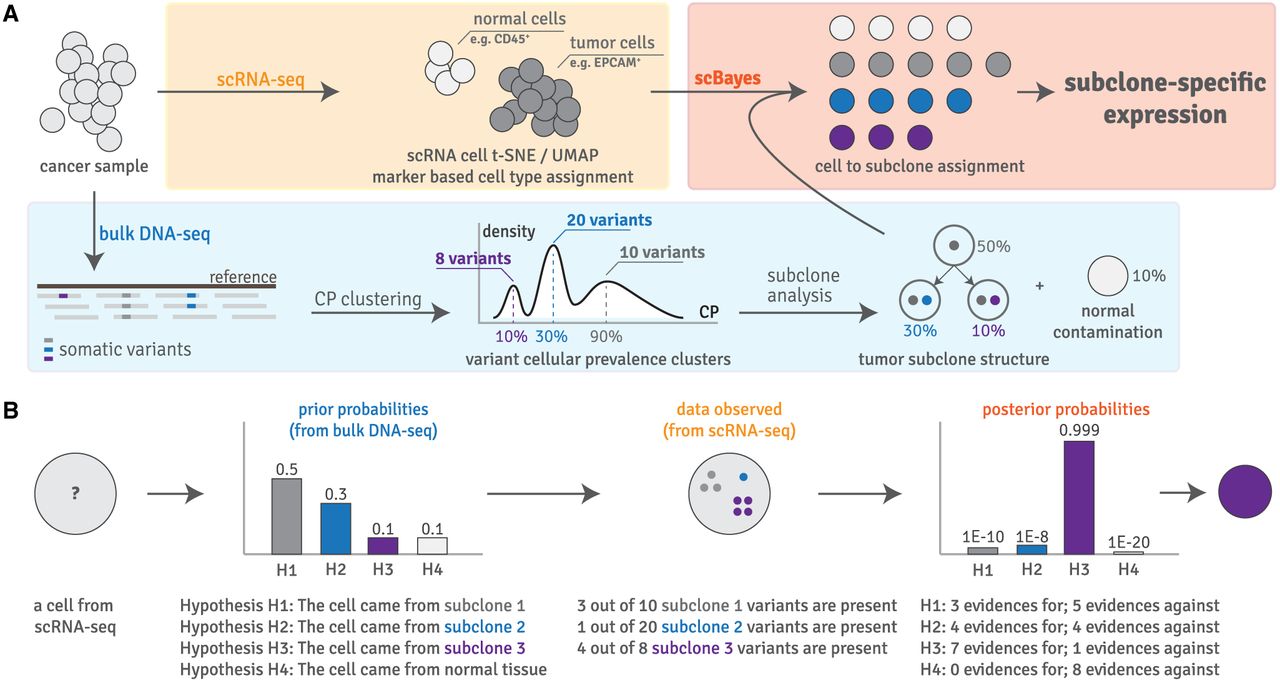
Overview of the scBayes algorithm. (A) The scBayes algorithm combines single-cell RNA sequencing-based transcriptomic analysis (shaded in yellow) with bulk DNA sequencing-based genetic subclone analysis (shaded in blue) to derive subclone-specific expression profiles (shaded in red) via assigning each cell a tumor subclone identity. Cells representing normal cell contamination are also assigned. CP stands for cellular prevalence. (B) Simplified overview of our probabilistic model. For a given cell, scBayes evaluates the Bayesian posterior probabilities that the cell represents each of the genetic subclones while taking evolution into consideration (e.g., for H3, both variants of subclone 1 and subclone 3 are considered positive evidences because subclone 3 is the descendent of subclone 1). The cell is assigned to the subclone that maximizes the posterior probability, and meets a minimum probability threshold. See Methods for a complete description of our statistics model.