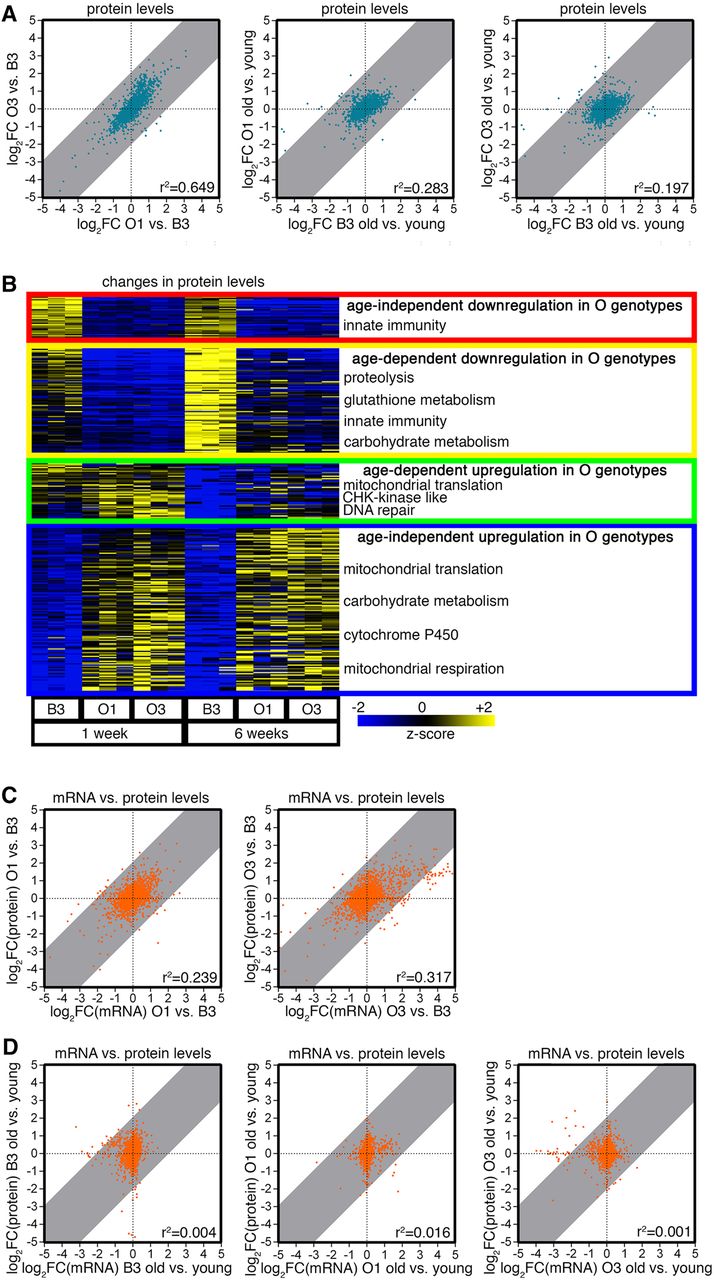
Changes in the muscle proteome differentiate the B3 from the O lines. (A) TMT mass-spectrometry indicates that there is similarity in the regulation of muscle protein levels in O1 and O3 versus B3 in young age. Proteomic changes induced by aging differ in O1 and O3 versus B3, consistent with O lines having different aging trajectories than B3 (Figs. 1–4). (B) Proteins differentially regulated in the skeletal muscle of O and B lines with aging are represented by similar categories as in Figure 4. (C,D) In line with previous studies, there is limited correlation between mRNA and protein levels in young age, and this is largely lost with aging in all strains (D). This finding suggests a possible preponderance of post-transcriptional mechanisms in the determination of proteome composition in old age. r2 correlation coefficients are indicated.