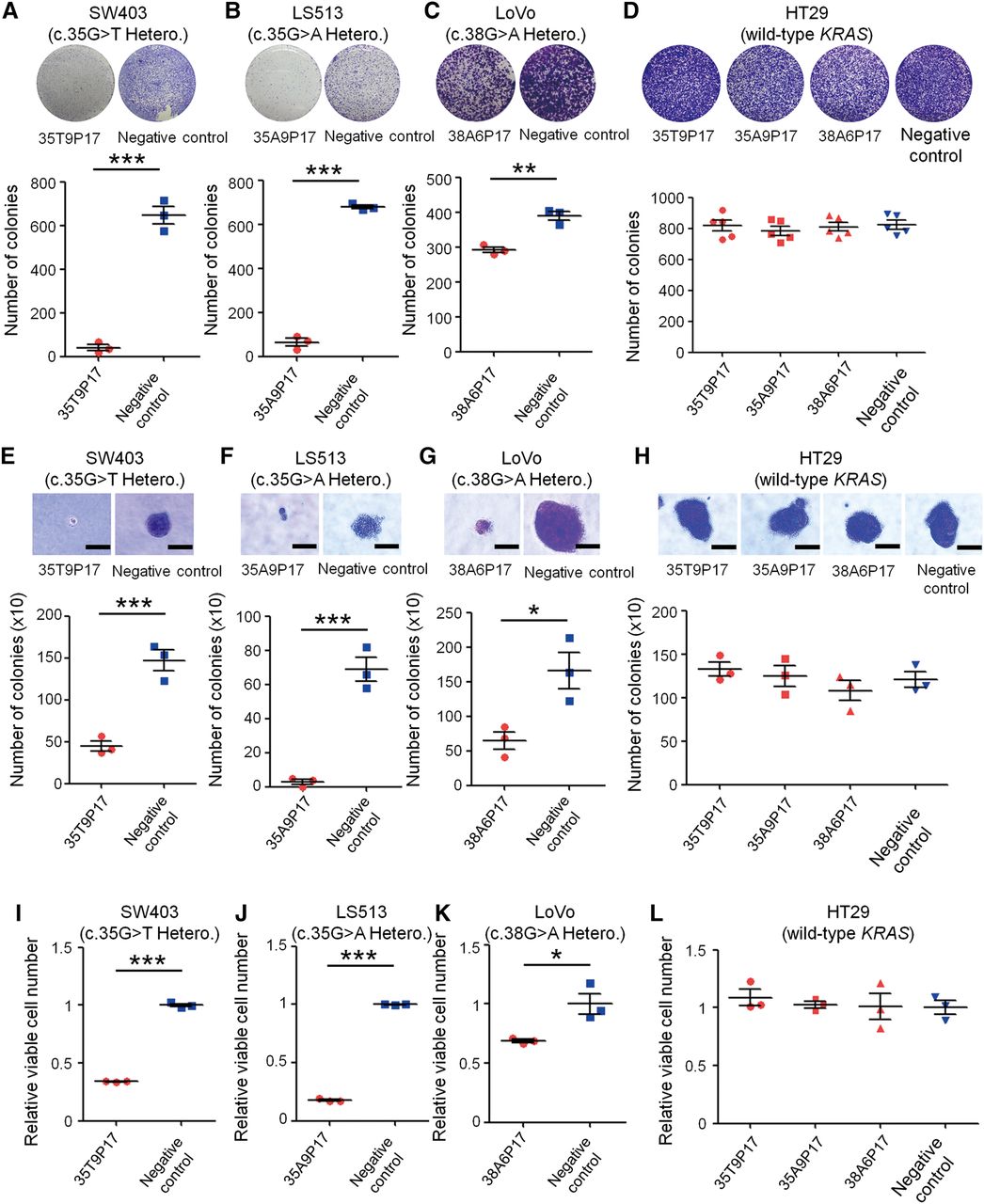
Targeting mutant KRAS with CRISPR-Cas9 inhibits cancer cell survival, proliferation, and tumorigenicity in vitro. Cancer cells containing KRAS mutations were subjected to colony forming (A–D), soft agar (E–H), and MTS (I–L) assays after lentiviral delivery of Cas9 and sgRNAs targeting mutant KRAS. A completely different sequence-targeting guide RNA without activity was used as the control (negative control). (Hetero.) Heterozygous, (Homo.) homozygous. Error bars represent SEM. (*) P < 0.05, (**) P < 0.01, (***) P < 0.001. (A–D) Colony forming assay. Representative images of wells after 2% crystal violet staining are shown at the top of each graph. (E–H) Soft agar assay. Representative images of formed colonies are shown at the top of each graph. Scale bar = 100 µm. (I–L) MTS assay. One day after the final transduction, untransduced cells were removed using puromycin selection for 24 h, after which 5000 cells per sample were plated onto 96-well plates. Cell proliferation was determined by use of MTS reagents 48 h after plating. The relative number of cells in cultures transduced with active versus negative control sgRNAs was determined by normalizing the optical density at 490 nm of each MTS reaction to the average optical density of the negative control reactions.