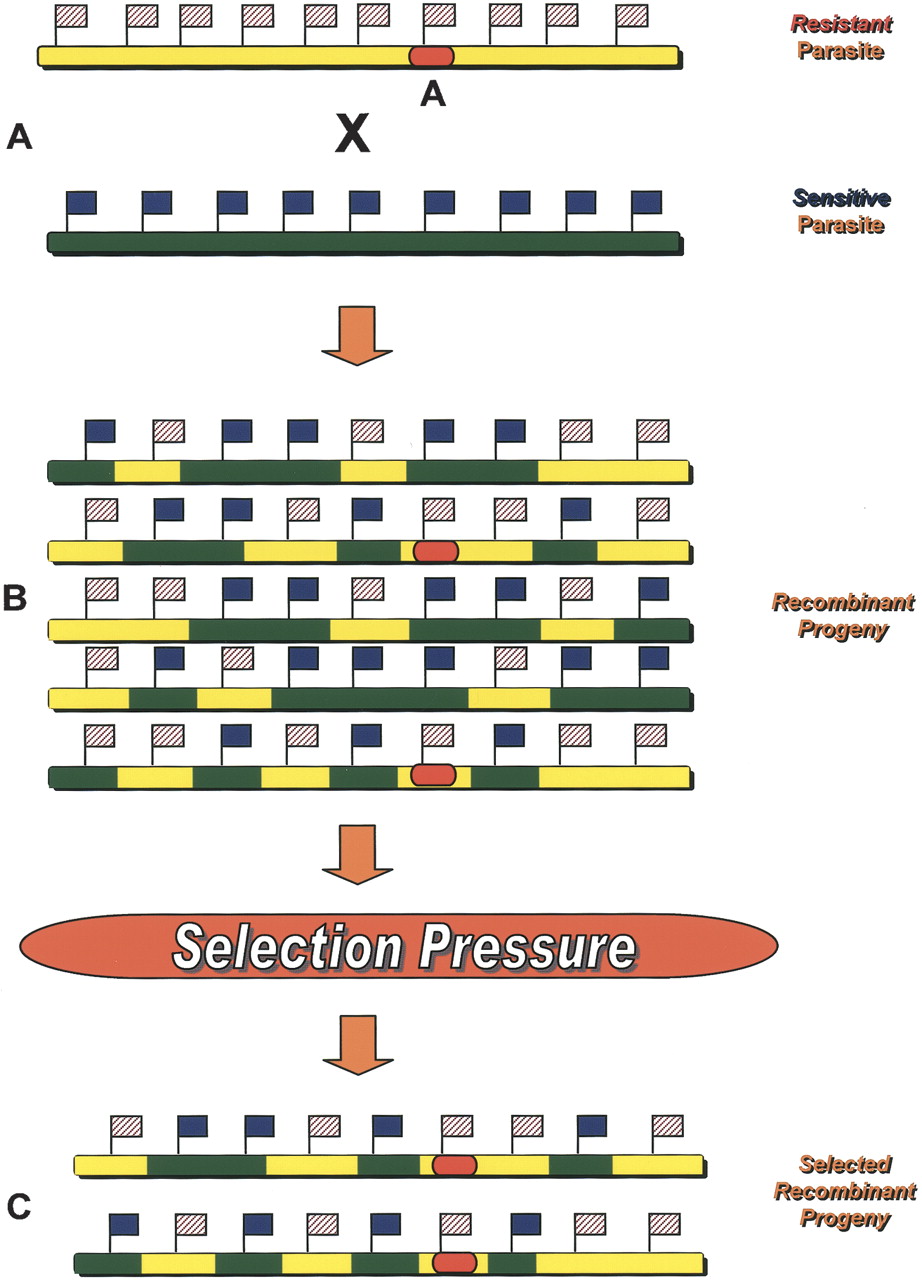
A schematic representation of the genetic principles of Linkage Group Selection. (A) Two cloned haploid parasites that differ in their sensitivity to a particular selection pressure are genetically crossed. In this example, resistance to the selection pressure is conferred by a gene at locus A. The genome is represented by the colored bars, while the flags represent dense, genome-wide markers between the two strains. (B) The resulting recombinant progeny population will consist of thousands of parasites, each bearing a random assortment of parental alleles, and also a random assortment of parental markers. (C) This uncloned population is then subjected to the selection pressure under investigation, and the resulting selected population will consist solely of parasites that possess the resistant allele of the gene that controls the phenotype of interest, and therefore, any markers linked to this locus will be mainly from the resistant parent, their proportion increasing as the distance from the locus under selection decreases. We look for markers of the sensitive parent that are removed or reduced by the selection pressure; the greater the reduction in the intensity of a sensitive marker, the closer it is linked to the allele removed by the selection pressure.