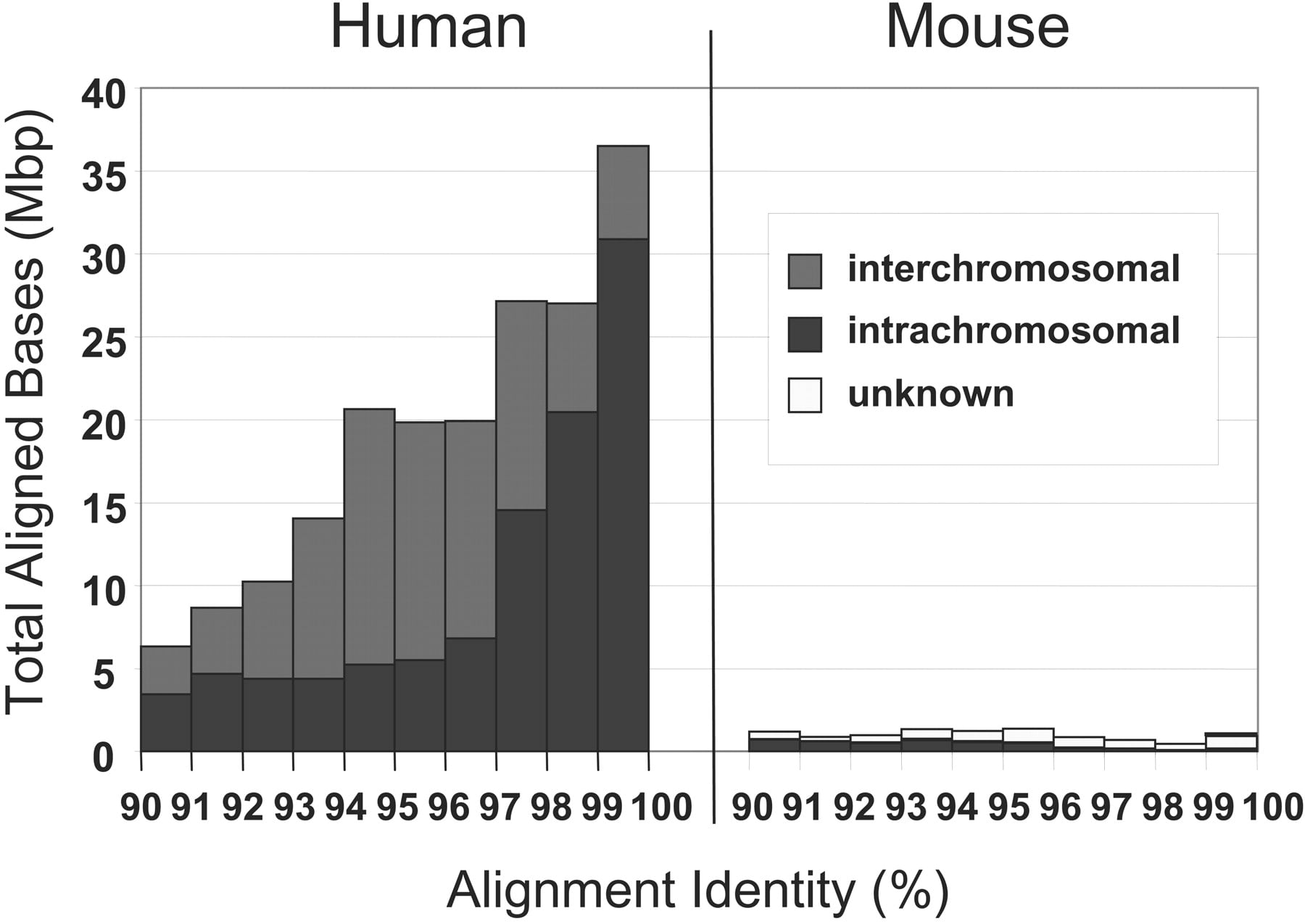
Whole-genome assembly comparison for mouse and human. We compared the sum of aligned bases (excluding gaps) for segmental duplications represented by alignments ≥10 kb in both the human genome (build 31) and the draft mouse genome (MGSCv3). Both the human and mouse genomes have alignments at all levels of identity; however, the human genome has a dramatically greater amount of aligned bases relative to the mouse (227,812 kbp vs. 10,042 kbp). The number of alignments increases geometrically relative to the number of copies. Mouse appears relatively rich in intrachromosomal duplications (black) and lacking in interchromosomal duplications (dark gray). However, many alignments are poorly characterized as indicated by the enrichment within the unplaced chromosome (chrUn—light gray).