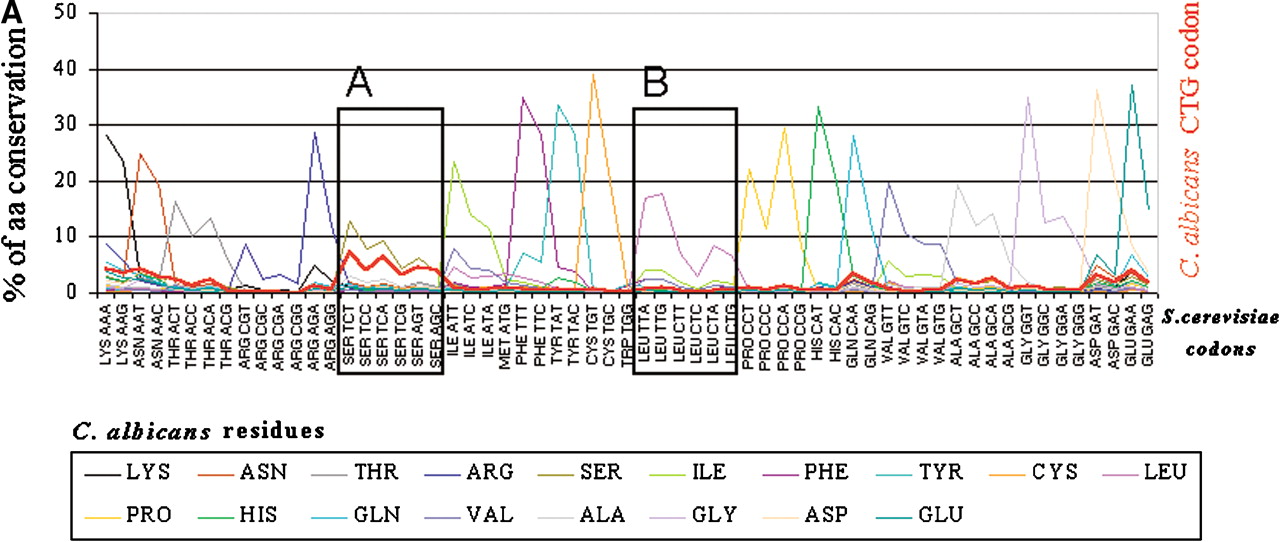
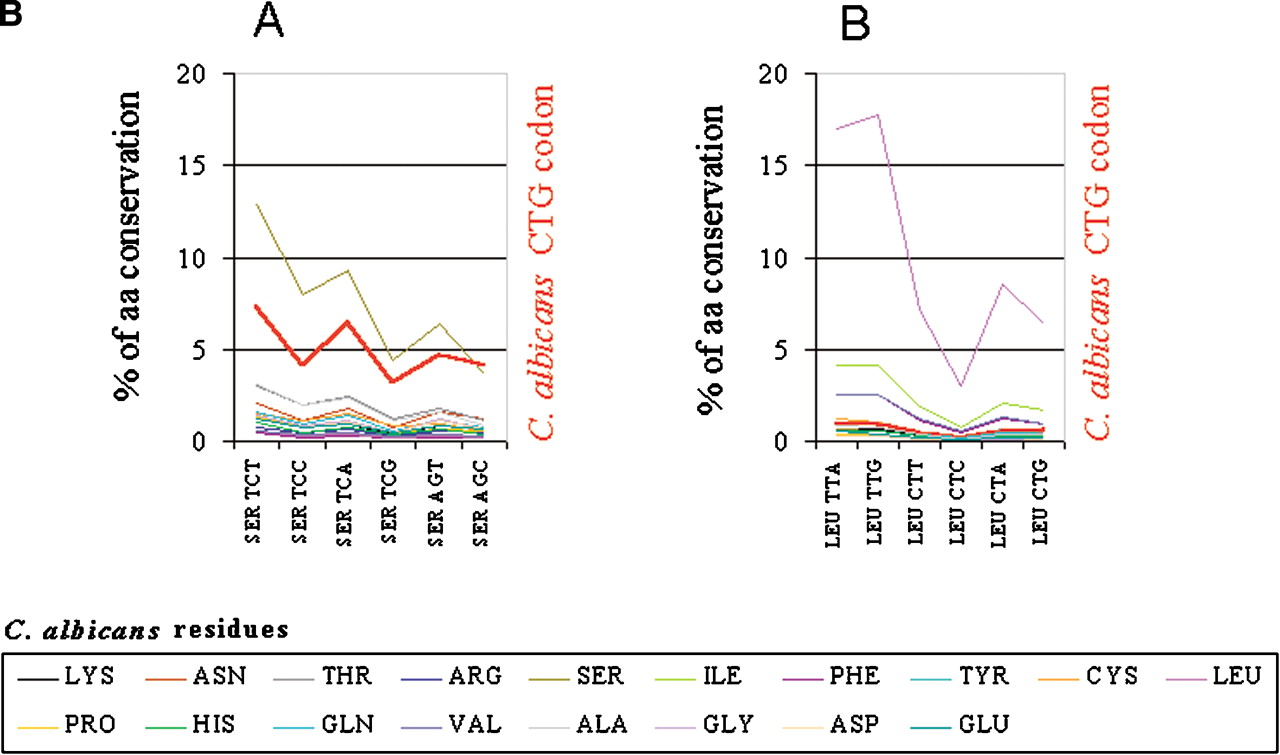
Candida albicans CTG codons display a biased pattern of conversion to serine codons in Saccharomyces cerevisiae. To identify the S. cerevisiae codons that correspond to each amino acid present at the respective position in homologous C. albicans genes, the two genomes were compared as described in Figure 8 with the exception that S. cerevisiae codons were taken as the reference in the alignment. As before, the CTG codon was computed independently. As in Figure 8, the major trend between the two genomes is amino acid conservation. However, the CTG codon shows a major deviation from the other leucine codons. That is, instead of being represented in the S. cerevisiae genome by leucine codons, it is represented by serine codons and codons corresponding to amino acids conserved of serine. (B) Magnification of the previous graph in the regions of serine and leucine codons (boxes A and B, respectively).