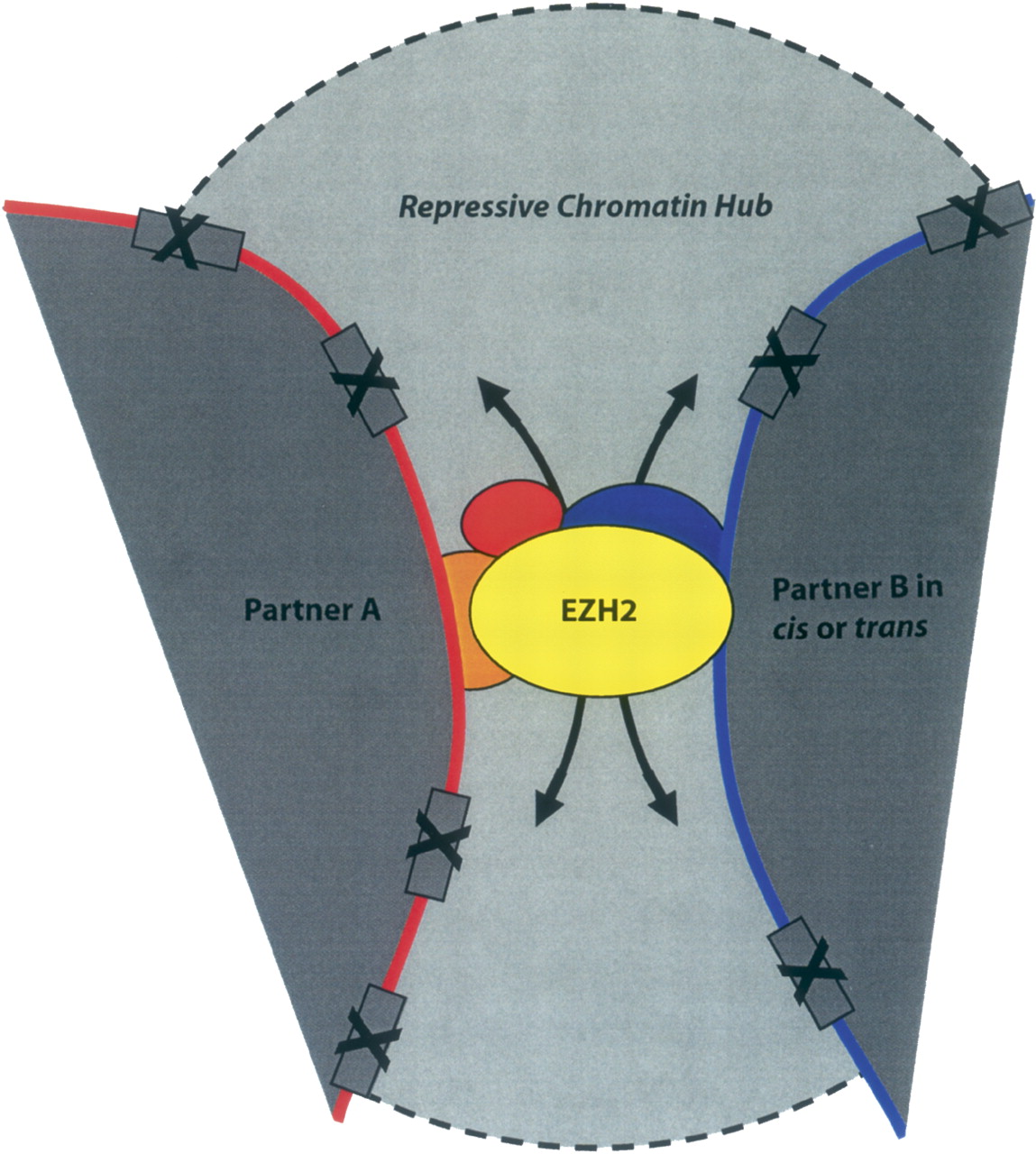
A hypothetical model showing that EZH2 mediates long-range chromatin interactions, both in cis and in trans and brings about silencing of multiple genes in a broad chromatin domain flanking the interacting regions. Such proximity might help achieve physiologically significant levels of PcG-dependent transcriptional repression of the target genes simply by increasing the concentration of Polycomb proteins and associated repressors in the vicinity of the interaction, by virtue of having multiple PcG occupied sites together. Alternatively, this kind of pairing might also result simply from the sharing of Polycomb factories (or PcG bodies) by multiple genes possibly due to less number of polycomb proteins available compared with the large number of genes that are subject to silencing at a given time in these stem-cell like cells where PcGs are crucial regulators of transcription. The distinct chromatin regions that we captured in our 6C assay might represent the docking sites for the PRC2 complex proteins (containing EZH2), from where the heterochromatin mark H3K27me3 self-propagates and spreads in both directions, thereby silencing a number of genes on the way, or the complex might contact the promoter directly by establishing small loop(s) between these docking sites and the site of action (promoter). Some genes might be protected from such reaction due to their promoter-specific protection mechanism(s), against such marks.