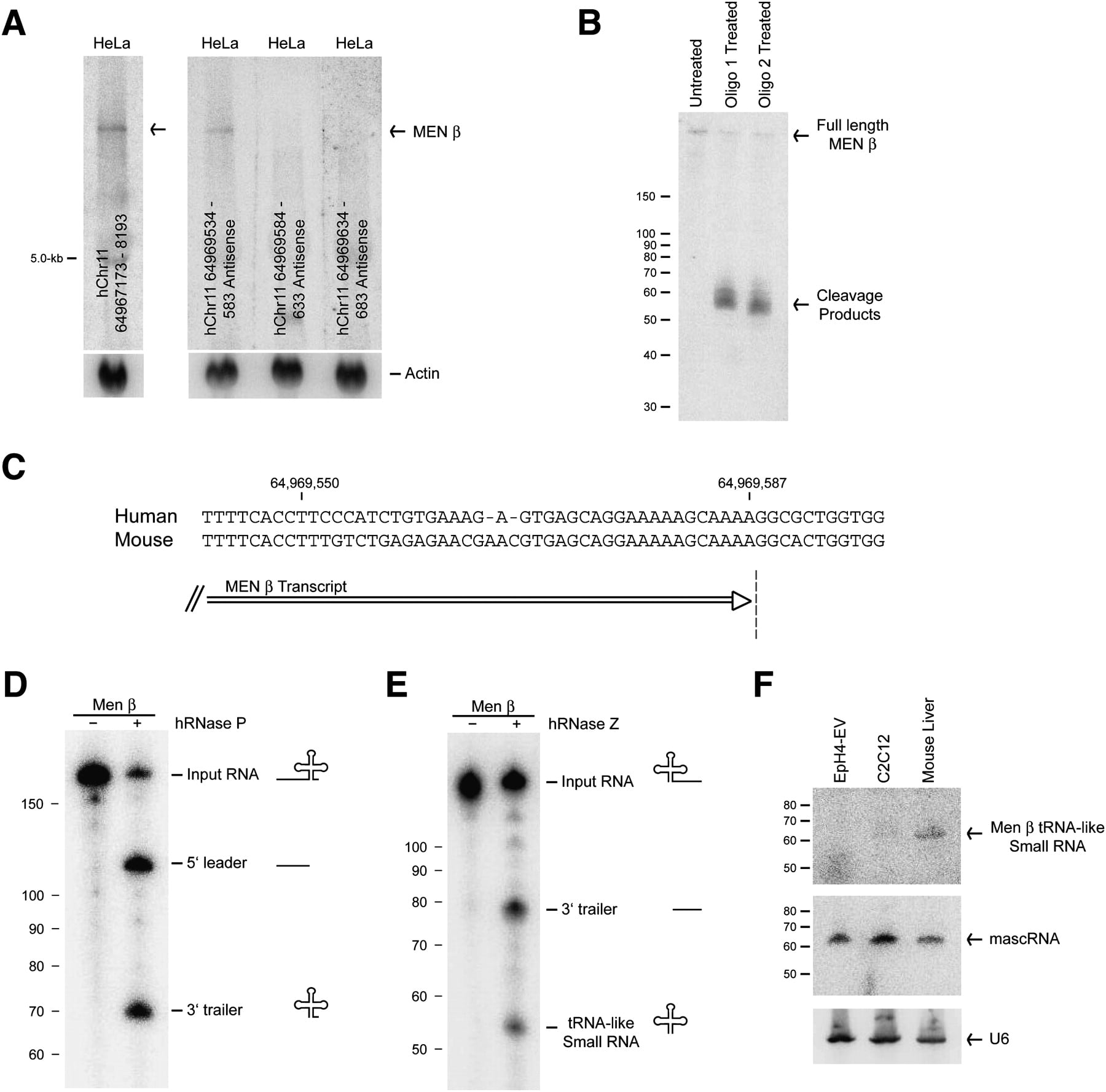
RNase P cleavage generates the 3′ end of Men β. (A) Northern blot analysis using 20 μg of total RNA showed that the human MEN β ortholog is expressed in (left) HeLa cells. The designated oligonucleotide probes were then used to roughly map (right) the 3′ end of MEN β. Beta-actin was used as a loading control. (B) RNase H digestion followed by Northern blot analysis was used to more finely map the 3′ end of MEN β. Oligo 1 is complementary to nucleotides 64,969,484–64,969,533 of human chromosome 11. Oligo 2 is complementary to nucleotides 64,969,492–64,969,541 of human chromosome 11. (C) The in vitro RNase P cleavage site, which corresponds to the 3′ end of the mature MEN β transcript, was mapped by ligation-based RNA cloning procedures. Numbers at the top indicate the position on human chromosome 11. (D) Men β is a substrate for human RNase P. (E) Recombinant His-tagged human RNase Z cleaves Men β in vitro. (F) Northern blot analysis using 25 μg of total RNA from EpH4-EV, C2C12, or mouse liver showed that the Men β tRNA-like small RNA is selectively stabilized in liver. U6 was used as a loading control.